You are using an <strong>outdated</strong> browser. Please <a href="http://browsehappy.com/" target="_blank">upgrade your browser</a> to improve your experience.
El embalaje es un vector de comunicación clave para una marca distribuida a través del comercio electrónico.
El equipo «Staci Create» puede encargarse del diseño, la fabricación y la gestión del suministro de sus embalajes personalizados.
👉 Las ventajas:
🔹 Externalización completa de tu flujo de trabajo de comercio electrónico: embalaje-logística-transporte.
🔹Embalaje totalmente personalizado a tu marca para una experiencia de cliente de alto rendimiento
🔹Embalaje a medida para optimizar los costes logísticos
🔹 Gestión optimizada de suministros y existencias
🔹 Embalaje ecorresponsable
🔹 Un modelo de negocio de «pago por uso».
No dude en ponerse en contacto con nuestros equipos para obtener más información! contact@staci.com
#Envasado #CadenaDeSuministro #RSE #Staci
Elegir una empresa logística de ecommerce no es una decisión táctica. Es una decisión que afecta a tu margen, a tu capacidad de escalar, a la experiencia del cliente y, en muchos casos, a la percepción final de tu marca.
En 2026, ningún responsable de operaciones sigue viendo la logística como “lo que pasa después de la venta”. En ecommerce, la logística forma parte del producto. Si el pedido llega tarde, mal presentado o con poca visibilidad, el cliente no culpa al almacén, ni al carrier, ni al universo. Culpa a la marca.
El mercado español confirma esta realidad. Los envíos de ecommerce crecieron un 240% entre 2019 y 2024, hasta alcanzar 1.303 millones de paquetes al año, con más de 3,3 millones de paquetes diarios y una tasa de incidencias mínima del 0,001%, según datos de UNO Logística. A la vez, el ecommerce con entrega física asociada superó los 575 millones de transacciones y el canal sigue creciendo tanto en volumen como en exigencia.
La consecuencia de estas cifras es que hoy una empresa logística ecommerce no compite solo por precio. Compite por velocidad, fiabilidad, integración tecnológica, gestión de picos, trazabilidad, logística inversa y capacidad de reforzar el valor de marca. Y por optimización.
Por qué una empresa logística ecommerce ya no es un proveedor más
La lógica clásica de “busquemos la empresa logística de ecommerce más barata” nunca ha sido recomendable pero ahora lo es menos. En ecommerce, la logística impacta directamente en cuatro variables de negocio, coste operativo, conversión, recompra y customer Lifetime Value.
Francisco Aranda, presidente de UNO, ha señalado en distintas intervenciones que “la logística se ha convertido en un factor decisivo de competitividad empresarial, especialmente en ecommerce, donde la experiencia de entrega influye directamente en la fidelización del cliente”.
Los operadores logísticos llevan años insistiendo en que la ventaja competitiva no se sostiene solo por producto o precio, sino por la capacidad de entregar valor con más fiabilidad, menor coste y mayor capacidad de respuesta.Martin Christopher, en su libro Logistics and Supply Chain Management lo resume en una lógica muy útil para cualquier director de operaciones: “el rendimiento logístico debe medirse en torno a resultados como better, faster, cheaper, closer”. Es decir: mejor servicio, más rapidez, menos coste y mayor cercanía al cliente.
Los envíos de ecommerce crecieron un 240% entre 2019 y 2024.
Qué beneficios aporta una empresa logística ecommerce especializada
Una empresa logística ecommerce especializada aporta beneficios muy concretos, medibles y con impacto en la cuenta de resultados.
Reduce costes de fulfillment sin exigir CAPEX
Externalizar la logística a una empresa logística ecommerce permite transformar estructura fija en coste variable y mejorar la eficiencia operativa, reducir costes de fullfilment. . El Informe CEL-NTT DATA Logística señala que la externalización facilita acceder a redes logísticas más amplias, tecnología especializada y mayor flexibilidad operativa.
Ramón García, director general de CEL, subraya que “la logística ya no puede evaluarse solo como un centro de coste, sino como una función estratégica capaz de generar ventaja competitiva y mejorar la experiencia de cliente”.
Esto permite optimizar costes, mejorar tiempos de respuesta y adaptar la capacidad operativa a la demanda real del negocio.
En la práctica, significa reducir inversión en almacenes propios, evitar desarrollos tecnológicos internos complejos y minimizar estructuras laborales rígidas. También permite absorber campañas pico con mayor elasticidad, aprovechando economías de escala y modelos operativos multicarrier.
Escala sin romperse en Black Friday, rebajas o Navidad
Uno de los grandes problemas del ecommerce no es vender mucho. Es vender mucho sin colapsar. El 76,6% de las empresas concentra su mayor impacto comercial en campañas como Black Friday y Navidad, y un 40% de los operadores incrementa su facturación entre un 16% y un 30% en estos periodos.
Mejora la experiencia del cliente final
Aquí está el punto que más infravaloran las marcas hasta que empiezan los problemas. La entrega es el único contacto físico entre ecommerce y cliente. Por tanto, la logística no cierra el proceso comercial: lo culmina. El estudio La Logística Ecommerce 2025 de UNO confirma que la experiencia de entrega es un factor relevante en la gestión logística ecommerce desde una perspectiva operativa y empresarial.
La satisfacción del cliente se sitúa entre los indicadores más valorados por las empresas, representando el 26,92% de los KPIs prioritarios en la gestión logística. Además, el éxito en la primera entrega, con un peso del 21,15%, se consolida como un indicador clave para garantizar eficiencia operativa y calidad de servicio.
El estudio también identifica la experiencia del cliente y la visibilidad del tracking como retos relevantes en la última milla, señalados por el 17,31% de las empresas participantes.
Estos datos reflejan que la logística no se evalúa únicamente por costes o tiempos. También se mide por su impacto en la percepción de servicio y la satisfacción del cliente final.
Libera foco directivo
Cuando el equipo de operaciones dedica demasiadas horas a perseguir incidencias, cuadrar devoluciones, resolver picos y parchear integraciones, deja de pensar en crecimiento, stock strategy, internacionalización o mejora de rentabilidad. Un especialista permite que la dirección se centre en negocio, no en incendios.
Aporta tecnología que una marca media no suele poder desplegar sola
La digitalización se ha consolidado como un factor clave en la competitividad logística. Actualmente, el 94% de las empresas logísticas en España utiliza soluciones tecnológicas avanzadas.
Además, el 76,7% identifica la inteligencia artificial como la tecnología con mayor capacidad transformadora en los próximos años. Su aplicación se centra especialmente en la predicción de la demanda, la optimización de rutas y la mejora de la atención al cliente.
También facilita el uso de analítica operativa para la toma de decisiones, la automatización de procesos en almacén y la implantación de portales digitales de devolución.
Cómo elegir una empresa logística ecommerce sin equivocarte
La pregunta no es solo quién tiene almacén o quién promete 24 horas. La pregunta correcta es: qué operador puede sostener tu modelo de negocio con margen y reputación.
Revisa su capacidad real de integración tecnológica
Una empresa logística de ecommerce debe integrarse con Shopify, WooCommerce, Magento, PrestaShop o tu stack propio mediante API, sincronizando inventario y estados de pedido en tiempo real. El estudio lo señala como factor crítico de selección.
Exige visibilidad y tracking proactivo
La visibilidad del pedido se ha convertido en una expectativa básica del consumidor ecommerce. Diversos estudios internacionales muestran que el 91% de los clientes rastrea activamente sus paquetes, y cerca del 80% experimenta incertidumbre o ansiedad cuando no puede hacerlo.
Este comportamiento obliga a que una empresa logística ecommerce disponga de sistemas de seguimiento avanzados y comunicación proactiva.
La actualización del estado del pedido en tiempo real permite reducir consultas al servicio de atención y mejorar la percepción de control por parte del cliente. Asimismo, el envío automático de avisos sobre cambios en la entrega contribuye a gestionar expectativas y evitar incidencias.
La gestión proactiva de problemas logísticos resulta igualmente clave. Anticiparse a retrasos o errores y ofrecer soluciones antes de que el cliente contacte refuerza la confianza en la marca.
Evalúa su capacidad de entrega, no solo su promesa comercial
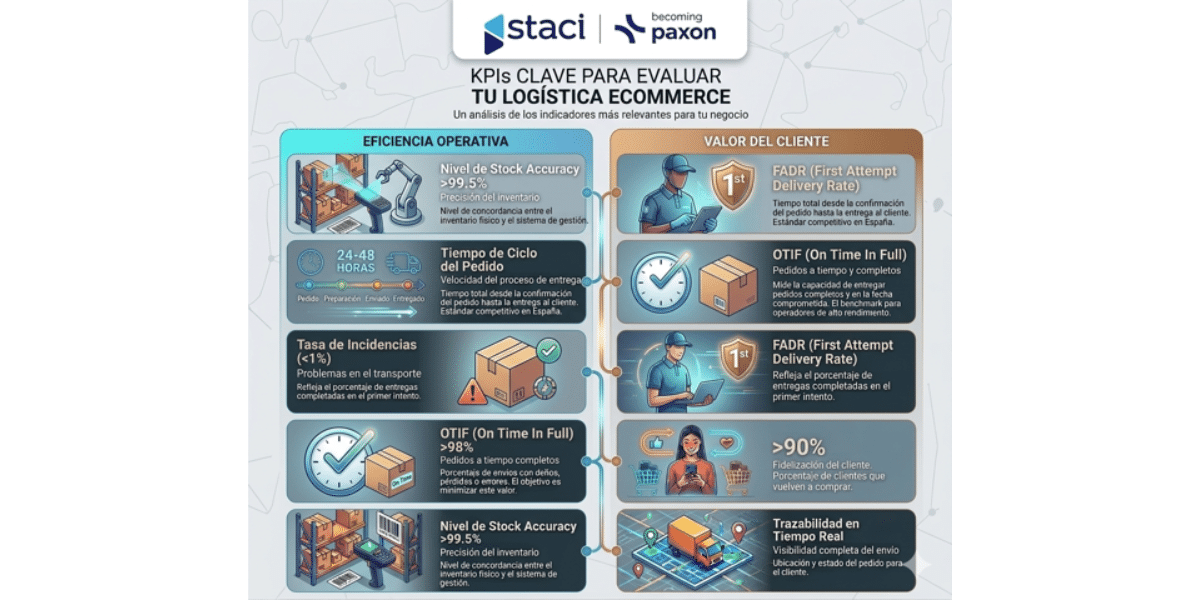
No basta con prometer rapidez en la entrega. Es necesario evaluar el rendimiento logístico mediante indicadores objetivos de servicio. Entre los KPIs más relevantes se encuentra el OTIF (On Time In Full), que mide la capacidad de entregar pedidos completos y en la fecha comprometida. En operadores de alto rendimiento suele situarse por encima del 98%.
Otro indicador clave es el FADR (First Attempt Delivery Rate), que refleja el porcentaje de entregas completadas en el primer intento. En entornos competitivos puede superar el 90%.
El Order Fulfillment Rate, que mide la precisión en la preparación de pedidos, suele situarse en niveles superiores al 97% en operaciones maduras.
El tiempo de ciclo del pedido también resulta determinante. En ecommerce, entregar en plazos de 24 a 48 horas se ha consolidado como estándar competitivo en gran parte del mercado español.
Pide KPIs de negocio, no solo de almacén
Un operador logístico especializado no se limita a optimizar procesos de picking o expedición. Su aportación debe medirse también por su impacto en resultados de negocio.
La logística influye directamente en indicadores como las ventas, la satisfacción del cliente y la fidelización a medio y largo plazo. Por ello, es recomendable evaluar el rendimiento de una empresa logística ecommerce mediante KPIs que conecten la operativa con la rentabilidad.
Entre los más relevantes se encuentra el coste logístico por pedido, que permite analizar la eficiencia de la preparación, el transporte y la entrega. También resulta clave el coste logístico sobre ventas, indicador que muestra el peso real de la logística en los márgenes del negocio. El coste por devolución es otro factor determinante, especialmente en sectores con alta rotación o elevados ratios de logística inversa.
La rotación de inventario ayuda a medir la capacidad de optimizar el stock y evitar inmovilizaciones que penalicen la rentabilidad. Desde la perspectiva del cliente, indicadores como el NPS, que mide la probabilidad de recomendación, y el CSAT, que evalúa la satisfacción tras la entrega o una incidencia, permiten analizar la percepción del servicio logístico.
Asimismo, métricas como la tasa de recompra o el Customer Lifetime Value reflejan el impacto real de la experiencia de entrega en el crecimiento sostenible del ecommerce.
Gráfico de los KPis clave para evaluar tu logística.
Analiza la logística inversa como palanca, no como castigo
En ecommerce, devolver no es una excepción; es parte del modelo. En 2025 el valor de las devoluciones de pedidos online realizadas en nuestro país alcanzó los 13.300 millones de euros, principalmente procedentes de los sectores de ropa (31%) y calzado (27%), seguidos de los productos electrónicos (23%), según un estudio de ZigZag y la consultora Retail Economics.
Pregunta por la especialización sectorial
No es lo mismo operar con productos promocionales, que moda, farmacia, alimentación, tecnología o cosmética. Cada vertical tiene ritmos, picos, requisitos regulatorios y expectativas de packaging distintas.
Una empresa logística ecommerce ya no puede limitarse a almacenar y enviar. Debe dominar especialidades que impacten en experiencia, rentabilidad y escalabilidad:
Fulfillment B2C y D2C: recepción, almacenaje, picking, packing, despacho multicarrier, tracking y devoluciones. Es la base.
Omnicanalidad real: capacidad de gestionar flujos B2B, B2C y D2C desde una sola plataforma y, si es posible, desde una estructura de stock unificada. Eso reduce duplicación y mejora eficiencia.
Packaging como experiencia de marca: este punto es más importante de lo que parece. El packaging es parte del producto percibido. No solo protege; comunica.
Logística promocional: muy relevante para marcas con campañas, kits, PLV, muestras o activaciones comerciales.
Gestión de picos: sin esto, cualquier promesa comercial se cae en la semana más importante del año.
El cliente sí percibe el valor logístico. Perfectamente que el pedido llegó cuando se prometió. O que la caja venía cuidada y el seguimiento fue claro. Y que la devolución fue fácil. Y eso afecta a fidelización.
Tendencias que están redefiniendo la empresa logística ecommerce
Más automatización y más inteligencia artificial
La automatización y el uso de inteligencia artificial están transformando el modelo operativo de la empresa logística ecommerce. En España, la adopción tecnológica se encuentra en fase de aceleración. Sin embargo, los referentes internacionales avanzan a mayor velocidad.
China se ha consolidado como uno de los mercados que marcan el estándar global en densidad operativa y rapidez de entrega en ecommerce. Diversas estimaciones sitúan el valor del mercado logístico vinculado al comercio electrónico por encima de los 200.000 millones de dólares y proyectan un crecimiento significativo en la próxima década. La principal lección del modelo chino no es únicamente la velocidad. Es la integración de infraestructura, datos y ejecución en una única capa operativa.
En Estados Unidos, el ecommerce también está redefiniendo las necesidades logísticas. CBRE estima que cada incremento de aproximadamente 920 millones de euros en ventas online puede requerir cerca de 93.000 metros cuadrados adicionales de superficie logística.
Estas previsiones reflejan la presión creciente sobre las redes de fulfillment y la importancia de desarrollar infraestructuras más próximas al consumidor. La última milla ganará aún más protagonismo. Se prevé que represente más del 20% del leasing industrial en 2026.
La lección del mercado estadounidense es distinta. La competitividad se está construyendo sobre redes logísticas más capilares, proximidad al consumidor y modelos de fulfillment distribuidos.
Externalizar la logística a una empresa logística ecommerce permite transformar estructura fija en coste variable.
Trazabilidad total como estándar
La transparencia en la entrega ha dejado de ser un elemento diferencial. Hoy es una exigencia básica del cliente ecommerce. Las marcas demandan visibilidad completa del pedido, capacidad de seguimiento en tiempo real y herramientas de comunicación proactiva. Una empresa logística ecommerce que no garantice trazabilidad operativa difícilmente podrá sostener niveles elevados de satisfacción.
Flexibilidad en entrega y devoluciones
El consumidor exige mayor control sobre la recepción del pedido. Esto impulsa el crecimiento de lockers, puntos de conveniencia y opciones de entrega en franjas horarias personalizadas.
La flexibilidad también se extiende a la logística inversa. Procesos de devolución ágiles y digitalizados se convierten en un factor clave para la fidelización.
Packaging más inteligente
El embalaje evoluciona hacia soluciones más eficientes y sostenibles. Reducir espacio vacío, optimizar materiales y reforzar la identidad de marca son objetivos cada vez más relevantes. Un packaging bien diseñado permite reducir costes logísticos y mejorar la percepción del producto en la entrega.
Principales operadores del mercado español
El mercado español cuenta con una oferta logística amplia y especializada. Entre los operadores más relevantes se encuentran STACI, DHL Supply Chain, SEUR, Correos Express, GLS, CTT Express, Logisfashion o Nacex entre muchos más. Sin embargo, no todos compiten bajo los mismos criterios. Algunos operadores destacan en paquetería y capilaridad. Otros se posicionan en internacionalización, sectores específicos como la moda o servicios adaptados a pymes.
La elección de una empresa logística ecommerce debe basarse en el modelo de negocio, el volumen operativo y las necesidades de experiencia de cliente. No en el reconocimiento de marca del operador.
Por qué STACI merece un foco especial
Si el criterio es elegir una empresa logística ecommerce con capacidad de trabajar la operación como herramienta de crecimiento y no solo como ejecución, STACI destaca por varios motivos.
Escala internacional con especialización real
Fundada en 1989, STACI ha experimentado un crecimiento sostenido que refleja su consolidación como operador logístico internacional. En 2024, la compañía alcanzó una facturación cercana a los 795 millones de euros y superó los 5.000 empleados en su estructura global.
Su red operativa cuenta con más de 90 hubs distribuidos entre Europa, Estados Unidos y Asia, lo que le permite ofrecer cobertura logística internacional y modelos de distribución adaptados a distintos mercados.
Además, dispone de más de un millón de metros cuadrados de superficie de almacenamiento y gestiona cada año más de 75 millones de pedidos para clientes de diferentes sectores.
La compañía administra cientos de miles de referencias en stock y presta servicio a más de 2.200 clientes, muchos de ellos grandes compañías con operaciones complejas y necesidades logísticas avanzadas. Estas cifras reflejan una capacidad operativa relevante y una trayectoria consolidada en la gestión de operaciones logísticas de alto volumen.
STACI no responde al perfil de un operador local limitado, sino al de una organización con escala, especialización y experiencia internacional.
Presencia y estructura sólida en España
STACI cuenta con una estructura operativa consolidada en el mercado español, desde la que gestiona proyectos logísticos para distintos sectores y canales de distribución.
La compañía opera desde plataformas ubicadas en Alcalá de Henares y Granollers, que suman más de 34.000 metros cuadrados de superficie logística. Estas instalaciones permiten gestionar operaciones de almacenamiento, preparación de pedidos y distribución con altos niveles de eficiencia y flexibilidad.
Además, la actividad de STACI en España está respaldada por certificaciones como ISO 9001 en gestión de calidad, ISO 14001 en gestión ambiental e ISO 27001 en seguridad de la información. La compañía también alinea sus prácticas con estándares internacionales en materia de responsabilidad social, como las directrices recogidas en ISO 26000.
Cobertura omnicanal integrada
STACI trabaja flujos B2B, B2C y D2C desde una sola plataforma. Eso permite evitar duplicación de stock, mejorar consistencia de marca y ganar eficiencia operativa.
Packaging y personalización como ventaja competitiva
La propuesta Staci Create aporta un valor diferencial para aquellas marcas que consideran la experiencia de entrega y el branding como elementos clave de su posicionamiento. A través de este enfoque, STACI ofrece soluciones de packaging completamente personalizadas que permiten adaptar el embalaje a las necesidades específicas de cada producto y canal de distribución.
El diseño de embalajes a medida contribuye a optimizar costes logísticos, reducir espacios vacíos y mejorar la eficiencia en el transporte y el almacenamiento.
Además, la compañía integra soluciones ecorresponsables orientadas a minimizar el impacto ambiental mediante la optimización de materiales y procesos. Este modelo permite externalizar de forma integral el flujo de embalaje, logística y transporte, facilitando a las marcas una gestión más eficiente y coherente de toda la cadena operativa.
Entonces, ¿cómo saber si necesitas cambiar de empresa logística ecommerce?
Estas señales suelen ser bastante reveladoras:
Tus incidencias consumen demasiado tiempo del equipo
El tracking genera más tickets que tranquilidad
La devolución penaliza demasiado la rentabilidad
Tus campañas duplican ventas, pero rompen operaciones
Tienes stock duplicado por canal
No puedes personalizar packaging sin complicarte la vida
El operador no te enseña KPIs útiles para negocio
La logística te impide crecer más rápido
Si dos o tres de estas te suenan familiares, no estás ante un problema “de almacén”. Estás ante un cuello de botella de negocio. La mejor empresa logística ecommerce no es la que más promete. Es la que te ayuda a vender mejor, entregar mejor, devolver mejor y fidelizar más.
En ese escenario, STACI destaca porque combina escala, especialización, cobertura omnicanal, personalización y foco claro en sectores donde la experiencia de entrega sí afecta a la percepción de valor.
FAQ
¿Qué es una empresa logística ecommerce?
Una empresa logística ecommerce es un operador especializado en gestionar almacenaje, preparación de pedidos, packaging, transporte, trazabilidad y devoluciones para tiendas online y marcas que venden por canales B2C, D2C o B2B.
¿Qué KPIs debo revisar antes de contratar una empresa logística ecommerce?
Los más relevantes son OTIF, Order Cycle Time, FADR, tasa de incidencias, coste logístico por pedido, coste por devolución, NPS, CSAT, tasa de recompra y nivel de trazabilidad en tiempo real.
¿La logística influye de verdad en la fidelización?
Sí. El 90% de los consumidores vincula la entrega con la recompra y que el 84% no vuelve tras una mala experiencia de entrega.
¿Qué valor diferencial aporta STACI?
STACI aporta cobertura omnicanal B2B/B2C/D2C, red internacional, packaging personalizado, certificaciones, experiencia multisectorial y una propuesta especializada sin competir con sus clientes en el mercado final.
¿Qué tendencia internacional debería vigilar un ecommerce español?
Dos especialmente: la hiperautomatización y velocidad operativa del modelo chino, y el enfoque estadounidense hacia redes de fulfillment más cercanas al cliente y una última milla cada vez más estratégica.
La experiencia de Staci en fulfilment multicanal ayuda a gestionar inventarios, despachar pedidos y reducir costes. Staci se convierte en una extensión de tu marca, integrándose perfectamente con tus plataformas y dándote acceso a nuestra red global de fulfilment.
¿Qué es la Logística Multicanal?
La logística multicanal abarca toda la gestión del fulfilment, almacenando tus productos, recibiendo los datos de pedidos de tus clientes, seleccionando, empaquetando y despachando los pedidos, pudiendo ser entregados tanto en tus retailers elegidos como en la puerta de la casa de tus clientes.
El Proceso de Logística Multicanal
Para maximizar la eficiencia, los expertos de Staci reciben tu stock y, cuando un pedido se realiza en tu web o en una web de terceros, seleccionamos y empaquetamos el pedido.
Este proceso es sencillo gracias a nuestras rápidas integraciones con las principales plataformas de eCommerce y los sistemas de tu empresa.
Trabajamos con una amplia red de socios de transporte especializados para distribuir tus pedidos, ya sea directamente al cliente final o a un mayorista que elijas.
1.5 millones
De pedidos al año
7 millones
De artículos preparados al año
+300.000
Clientes
Fulfilment B2B
Nos encargamos del almacenamiento, la preparación y el empaquetado de productos, y colaboramos con una gran variedad de retailers de confianza para que tus artículos estén en los puntos de venta más convenientes para tus clientes.
Esto nos permite atender con experiencia múltiples sectores como: cosmética, farmacéutico, retail, hogar, restauración y muchos más.
Nuestros sistemas optimizados de gestión de almacenes en España nos permiten responder de forma eficiente a la demanda, asegurando que los pedidos se preparen correctamente y lleguen puntuales a su destino.
Fulfilment B2C
Además de las entregas a retailers, ofrecemos servicios B2C y de eCommerce personalizados para entregar directamente los pedidos a tus clientes.
Nuestros sistemas de cadena de suministro optimizados garantizan un picking rápido y un empaquetado cuidadoso, incluyendo kitting y co-packing, asegurando un proceso eficiente que reduce costes.
También ofrecemos servicios de packaging a través de Staci Create, que diseña, produce y repone tus líneas de embalaje. Esto te permite tener un solo proveedor para todos los componentes de fulfilment y mejorar la experiencia de unboxing, generando mayor valor percibido.
Devoluciones
En Staci ofrecemos diferentes opciones para devoluciones, según el socio de entrega utilizado. Estas incluyen devolución en tienda, en oficina de correos, recogida en domicilio, devolución en Parcelshop y taquillas automáticas.
Además, proporcionamos datos de trazabilidad para mantener a todos informados durante el proceso.
Logística Multicanal a tu medida
El fulfilment multicanal te permite tener un único punto de distribución y comunicación, lo que simplifica la gestión.
También reduce costes: solo pagas por un espacio de almacenamiento y Staci ofrece un modelo de pago por uso, para maximizar el valor.
Nuestros servicios gestionan tu inventario y te dan acceso a soluciones de fulfilment en 9 países y 3 continentes.
Somos muy flexibles: podemos añadir múltiples servicios de valor a tu cadena de suministro e integrarnos con todos tus sistemas, creando una solución a medida que no encontrarás en ningún otro lugar.
Lo que dicen nuestros clientes
Staci fue adjudicataria de un contrato logístico plurianual por parte de una de las principales marcas de cosmética del mundo.
Necesitaban una solución para gestionar una logística multicanal compleja en un contexto de rápido crecimiento.
Les proporcionamos B2B y B2C con nuestro portafolio multitransporte, sistemas integrados de gestión de pedidos y trazabilidad, un “almacén dentro del almacén”, entregas a retailers con requisitos complejos, gestión de exportaciones a la UE, China y resto del mundo, además de servicios de envoltorio de regalo y reempaquetado.
La colaboración ha sido un gran éxito, gestionando 180.000 pedidos B2C al año y 20.000 pedidos B2B al año.
¿Por qué elegir Staci?
Modelo de pago por uso
60+ centros de fulfilment en todo el mundo
Compromiso con la colaboración y mejora continua
Solidez financiera garantizada
Gestión transparente, honesta y auténtica
Experiencia contrastada en logística automotriz
Solicita un presupuesto
Si buscas mejorar el rendimiento de tu cadena de suministro, tienes dificultades con la gestión de inventario o necesitas apoyo logístico en tu cadena de suministro de productos terminados, hablemos.
Spanish law has a name for the warehouse that stores someone else’s medicines: almacén por contrato. It has no equivalent for a face serum, a sun cream or a bottle of perfume. That asymmetry is the first thing to understand about contract logistics for pharma and cosmetics in Spain. The two categories often share a buyer, a sales channel and even a pharmacy shelf, but they follow different rules, and so does the operator that handles them.
Medicines can only be stored and distributed by authorised entities working to Good Distribution Practice (GDP). Cosmetics follow EU cosmetics regulation, which asks less in terms of authorisations but still expects care in storage, transport and traceability. Choosing a logistics partner starts with knowing which of your products sits where, and whether the operator is the right fit for each one.
Why is Spain a strategic hub for pharma and cosmetics contract logistics?
Spain is both a manufacturing base and an export platform for the two industries. Its pharmaceutical production is concentrated in Catalonia and Madrid, the same two regions that anchor the country’s logistics network.
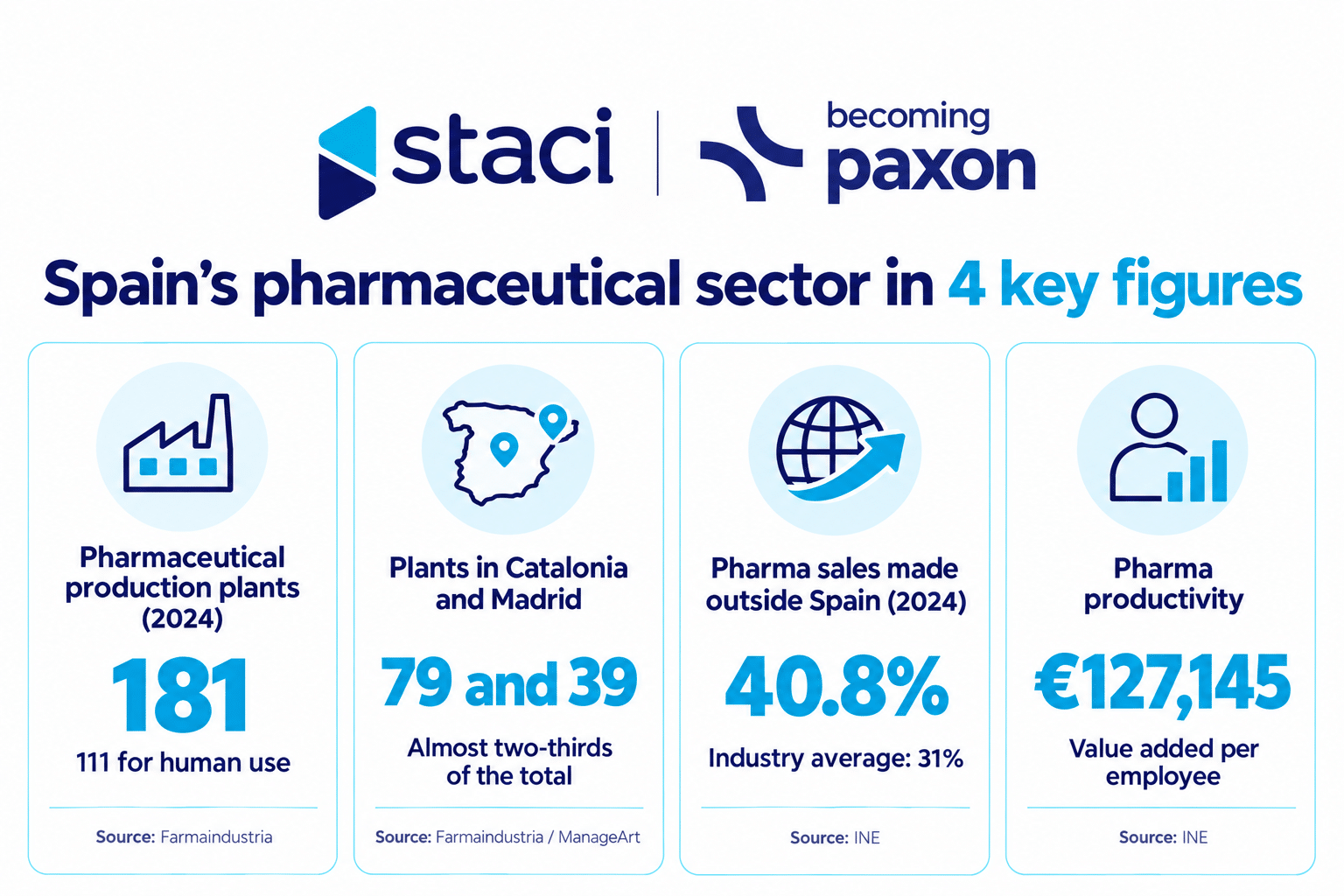
Spain closed 2024 with 181 pharmaceutical production plants, 111 of them making medicines for human use, according to Farmaindustria. Catalonia hosts 79 of those plants and the Community of Madrid 39, almost two-thirds of the national total between them. Together, the sector’s plants produce goods worth more than €23,000 million a year, over 30% of Spain’s high-technology manufacturing output.
The destination of that output matters just as much for logistics. The INE’s structural business statistics show that 40.8% of the sales of Spanish pharmaceutical manufacturers in 2024 were made outside Spain, against an average of 31% for industry as a whole. The sector is also the third most productive in Spanish manufacturing, at €127,145 of value added per employee.
Key figures on Spain’s pharmaceutical industry: production capacity, geographical concentration, international sales and productivity. Source: Farmaindustria, INE and ManageArt.
Cosmetics adds a second export engine, covered below. For an international brand, the takeaway is practical. Spain’s health and beauty supply chains are built for export, and they cluster where industrial, supplier and logistics capacity already sit.
What does contract logistics mean for pharmaceutical companies in Spain?
Pharmaceutical contract logistics means handing storage, order preparation and distribution to a specialist third party. The laboratory keeps its focus on manufacturing, marketing and regulatory affairs.
In Spain, this is a regulated activity. Royal Decree 782/2013 on the distribution of medicines recognises the contract warehouse as a distribution entity in its own right. It must be authorised for the activities it carries out, and it works under a contract that sets out who is responsible for what.
Two ideas matter for any buyer. First, the operator must be qualified for medicines specifically, not just experienced in logistics. Second, outsourcing the operation does not outsource the responsibility. The laboratory remains accountable for how its products are handled, which is why the contract and the technical agreement behind it deserve as much attention as the price.
Is GDP required for pharmaceutical contract logistics in Spain?
Yes. Any company that distributes medicines on behalf of a laboratory or wholesaler must work to the EU Good Distribution Practice guidelines. Their aim is to protect the quality and integrity of medicines from the warehouse to the pharmacy, and to keep falsified products out of the legal supply chain.
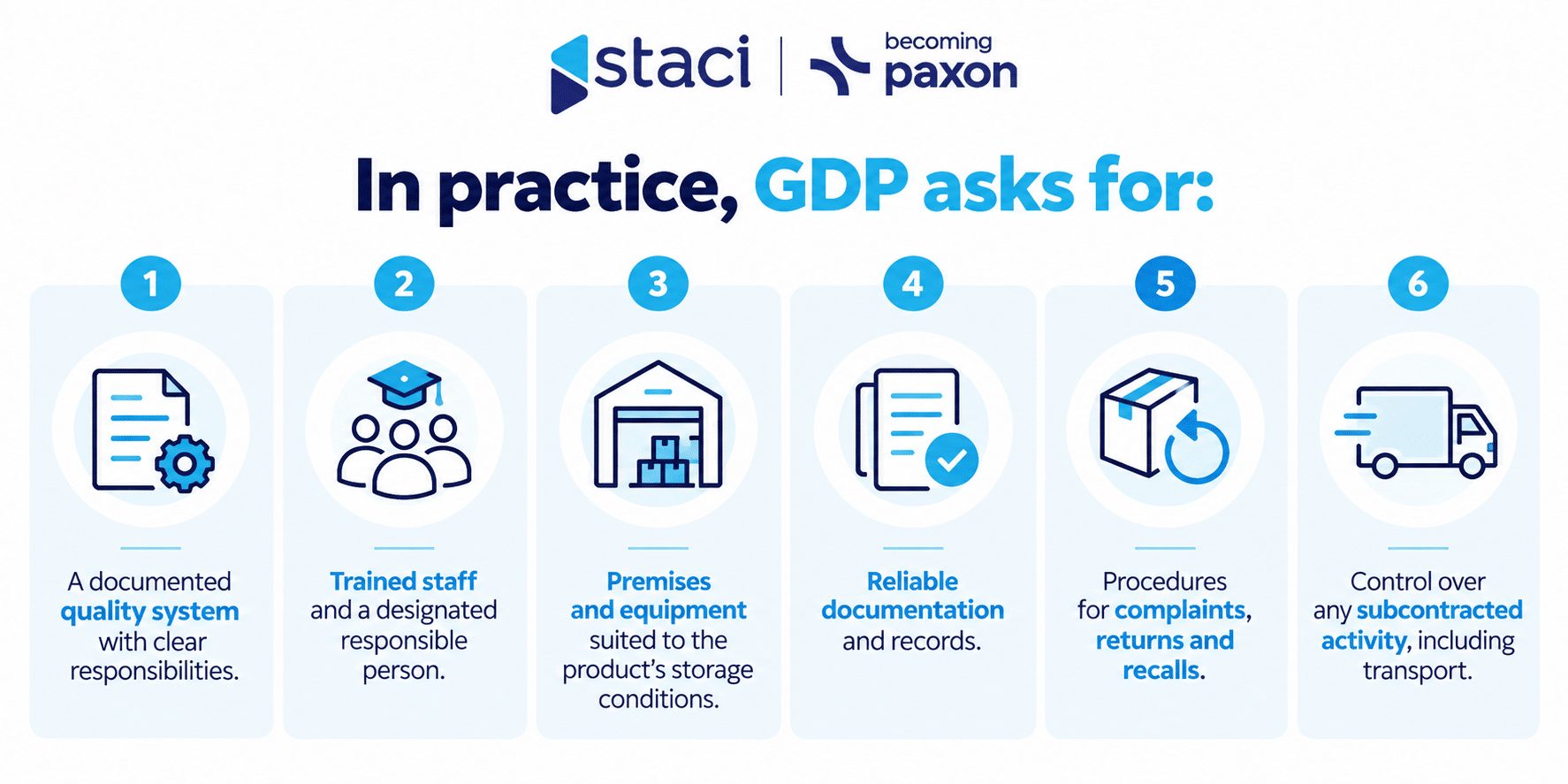
GDP sets clear requirements to safeguard pharmaceutical product quality throughout the distribution process.
For a pharmaceutical company, the consequence is simple. A logistics provider cannot be chosen on price per pallet or per order alone, because its quality system becomes part of your own supply chain.
Why does validated transport matter in pharmaceutical logistics?
A medicine can leave the warehouse in perfect condition and still be compromised on the road. The storage conditions set by the manufacturer have to be maintained throughout the journey, and the AEMPS considers transport validation mandatory for medicines.
Validation means demonstrating, in advance, that a given route, vehicle and packaging configuration keeps products within their limits. It takes into account transit times, seasonal temperatures and the critical points along the way. Customers can ask to see the monitoring records.
The practical difference is between an operator that offers temperature-controlled logistics and one that can document, shipment by shipment, that pharmaceutical products travelled in the right conditions.
What is different about contract logistics for cosmetics in Spain?
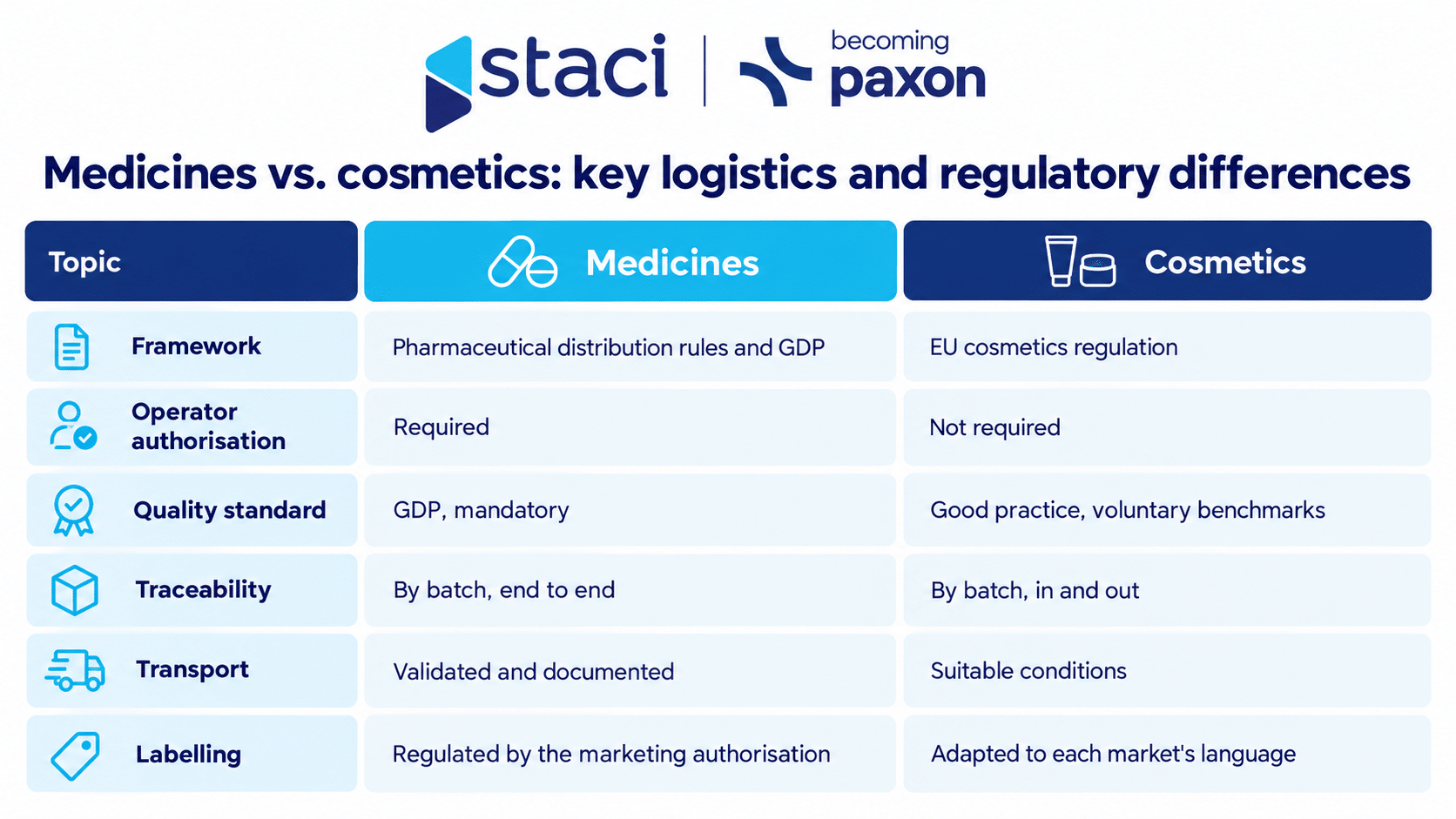
Cosmetics are not governed by pharmaceutical GDP. Their framework is Regulation (EC) No 1223/2009, applied in Spain through national legislation. No specific distribution authorisation is needed. That does not make logistics a free-for-all, because distributors are still expected to:
store and transport products in conditions that keep them compliant;
check labelling and expiry dates before products reach the market;
keep batch traceability, knowing who supplied each batch and where it went;
adapt labelling to the language requirements of each destination market.
That last point matters for brands selling across Europe from Spain. Relabelling and market-specific packs are a compliance task as well as a marketing one. Many operators also apply GDP principles in cosmetics logistics as a voluntary benchmark, which raises the standard without changing the legal framework.
A comparison of the main regulatory and operational differences that shape logistics for medicines and cosmetics.
Why is cosmetics logistics becoming strategically important in Spain?
Because the sector has grown faster than the economy for five years and depends increasingly on exports. Stanpa’s 2025 industry review puts the cosmetics and perfume industry’s contribution to Spanish GDP at 1.03%, up from 0.9%, after cumulative market growth of 44.3% over five years. Spending per inhabitant reached €234.50 in 2025.
Exports more than doubled in the five years to 2024 and now exceed those of wine and olive oil combined. That reach also brings exposure. The United States, the sector’s first destination outside the EU, took €725 million of Spanish beauty exports in 2025, 13% less than the year before, after new tariffs took effect. The Middle East, a strategic market worth €480 million, faces its own logistics disruption.
The pharmacy counter is where the two industries meet. Stanpa reports that pharmacy as a point of sale for cosmetics reached almost €2,100 million in 2024, up 7.7%, with dermopharmacy growing 8.6%. The same laboratory can sell a medicine and a dermocosmetic line through the same outlet, under two different sets of rules. At the smallest end of the spectrum, even a free sachet has to meet cosmetics rules, as we explained in our guide to cosmetics samples logistics.
What services should a pharma and cosmetics contract logistics provider offer?
The exact scope depends on the product, but most health and beauty brands evaluate the same core capabilities.
Warehousing and inventory control
Storage zones matched to each product’s conditions, with real-time stock visibility by SKU, batch and location.
Batch and expiry-date traceability
Batch and expiry capture at goods-in and at dispatch, so affected units can be located quickly for a recall, a return or a quality check. This is where traceability technology earns its cost.
FEFO inventory management
First Expired, First Out picking reduces obsolete stock and unnecessary destruction wherever shelf life matters.
Temperature management
Each product has its own storage range, and the operator should be able to maintain and record it in the warehouse and on the road.
Recall and reverse-logistics procedures
The ability to identify, isolate and withdraw affected stock under agreed procedures, and to run reverse logistics without losing batch data.
Co-packing and promotional logistics
Kitting, gift sets, sampling, inserts, displays and relabelling for specific markets. Co-packing has to respect labelling rules. In the pharma channel, campaign materials also carry their own requirements.
B2B, retail and ecommerce fulfilment
Pharmacies, wholesalers, retail chains, marketplaces and direct-to-consumer orders served from the same inventory, without losing traceability. The operational requirements are detailed in our guide to choosing an ecommerce warehouse in Spain.
What should international companies check before selecting a pharma logistics provider in Spain?
For medicines, the essentials fit in a short list:
Authorisation for the specific activities you plan to outsource.
A working GDP quality system, with a named responsible person.
Documented temperature control in storage and transport.
End-to-end batch and expiry traceability.
Tested procedures for returns and recalls.
A contract and technical agreement that make responsibilities explicit.
Your own quality and regulatory team should review the detail. For a regional view of the market, see our guide to pharmaceutical fulfilment in Madrid.
What should cosmetics brands check?
For cosmetics, the focus shifts from authorisations to day-to-day control:
storage conditions suited to each formula;
batch traceability in and out;
expiry control and FEFO picking;
label and language checks for each destination market;
returns handling that preserves batch data;
capacity for ecommerce, retail and co-packing from the same stock.
Which KPIs should be included in a contract logistics agreement?
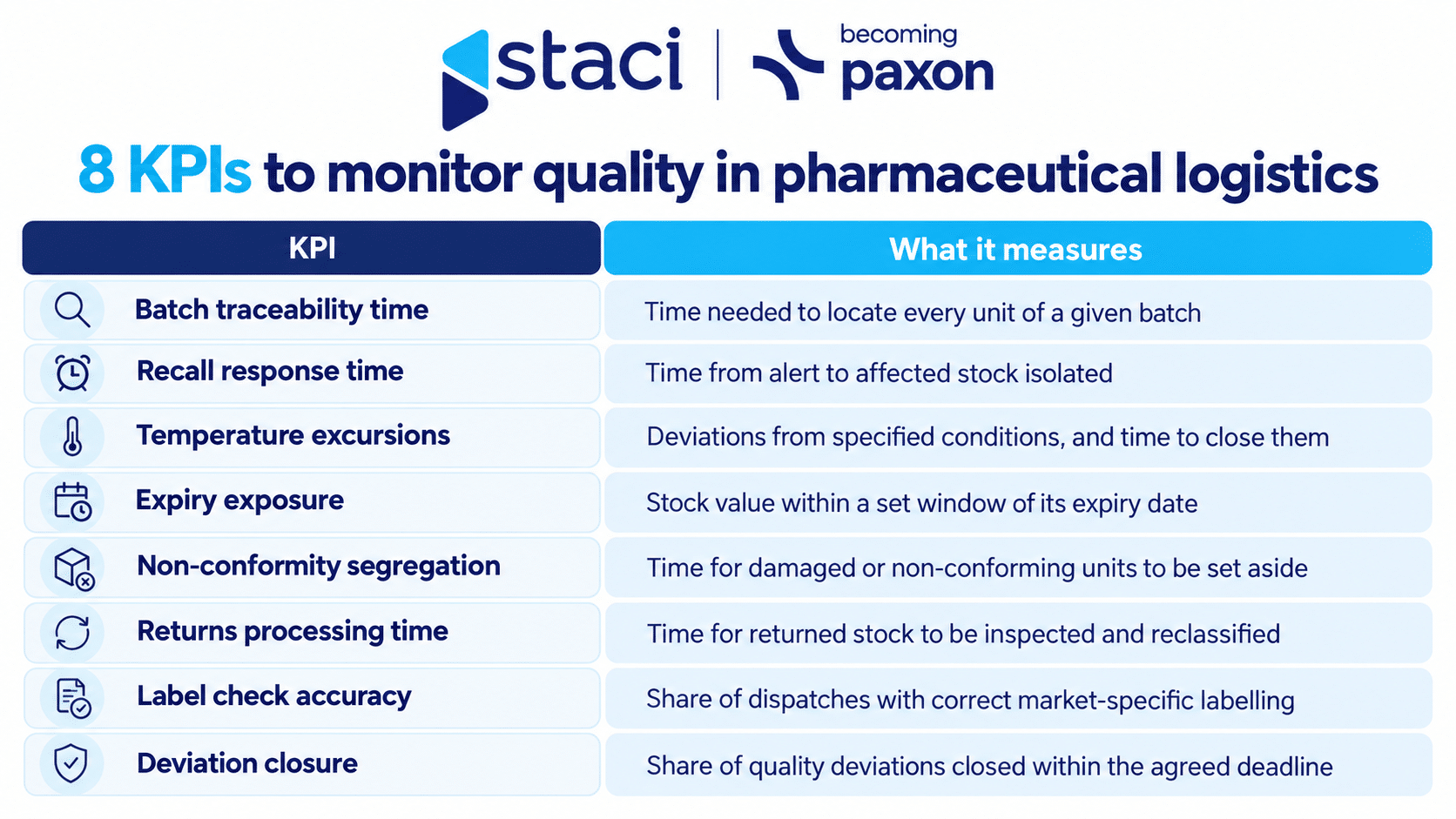
The indicators that matter most for regulated products are the ones that measure control, not just speed. General service indicators such as OTIF, order accuracy and inventory accuracy still apply, and we covered them in our guide to 3PL performance in retail. A health and beauty contract should add these:
These KPIs help track the processes that matter most for quality in pharmaceutical logistics. Target values should come from your own product profile and service model, not from generic benchmarks.
Why can one contract logistics partner for pharma and cosmetics create value?
It can, as long as the partner is qualified for every flow it takes on. Groups that sell medicines, dermocosmetics, food supplements and personal care face similar operational challenges under different rules. A single partner can share inventory visibility, automation, fulfilment and value-added services across the portfolio, while keeping separate procedures where each product requires them.
In practice, many health and beauty groups run two models side by side. An authorised contract warehouse handles medicines. A specialised 3PL handles the rest of the portfolio: cosmetics, personal care, supplements and promotional material, often with more flexibility in co-packing, multichannel logistics and campaign work.
The strongest model standardises operations where that creates efficiency and differentiates them where compliance requires it. What it should never do is treat every product the same way.
Staci, your contract logistics partner for health and beauty brands in Spain
The best contract logistics partner is not necessarily the one with the largest warehouse or the lowest handling rate. It is the one whose processes, systems and documentation match the product it handles.
Staci, now part of the pan-European Paxon network, works with cosmetics, personal care and food supplement brands, and supports pharmaceutical companies with the promotional and campaign flows that surround their products. It operates 7 centres in Barcelona and Madrid, with more than 42,000 m². From there it combines batch-controlled storage, unit-level picking, kitting, co-packing, relabelling and distribution to pharmacies, retail chains and consumers.
The visibility layer is Ecats Staci, the group’s platform for real-time stock, order and campaign control, which lets brands open controlled ordering to sales teams and retail networks.
If your health and beauty portfolio needs a partner in Spain, talk to the Staci team about how to structure it.
Contract logistics for pharma and cosmetics: frequently asked questions
What is pharmaceutical contract logistics in Spain? It is the outsourcing of storage, order preparation and distribution of medicines to an authorised specialist operator, known in Spanish law as an almacén por contrato.
Is GDP mandatory for pharmaceutical logistics in Spain? Yes. Any company distributing medicines on behalf of a laboratory or wholesaler must work to the EU Good Distribution Practice guidelines.
Does GDP apply to cosmetics in Spain? Not as a legal requirement. Cosmetics follow EU cosmetics regulation, which still expects proper storage and transport, label and expiry checks, and batch traceability.
What should a pharmaceutical logistics contract include? The activities being outsourced, the technical agreement and a clear split of responsibilities between the brand and the operator.
Can a 3PL without a pharmaceutical authorisation work for a pharma company? Yes, for flows that are not medicines: cosmetics, dermocosmetics, food supplements, personal care and promotional material. Medicines themselves require an authorised distribution entity.
Why is Spain attractive for pharma and cosmetics distribution? Spain has 181 pharmaceutical plants, concentrated in Catalonia and Madrid, and sells 40.8% of its pharmaceutical output abroad. Its cosmetics exports more than doubled in the five years to 2024.
Bibliography
Agencia Estatal Boletín Oficial del Estado.Real Decreto 782/2013, de 11 de octubre, sobre distribución de medicamentos de uso humano. BOE.
Agencia Estatal Boletín Oficial del Estado.Real Decreto 85/2018, de 23 de febrero, por el que se regulan los productos cosméticos. BOE.
European Parliament and Council of the European Union.Regulation (EC) No 1223/2009 on cosmetic products. EUR-Lex.
European Commission.Guidelines of 5 November 2013 on Good Distribution Practice of medicinal products for human use (2013/C 343/01).
AEMPS.Preguntas y respuestas de las buenas prácticas de distribución de medicamentos de uso humano.
AEMPS.Catálogo de entidades de distribución.
Farmaindustria.Estudio de la implantación industrial del sector farmacéutico en España. Actualización 2024(ManageArt), and press release of 17 July 2025.
INE.Estadística Estructural de Empresas: Sector Industrial. Año 2024. Press release of 31 March 2026.
Stanpa.Radiografía de la industria cosmética y del perfume en España 2025, and press releases of 23 April 2026 and October 2025.
Uría Menéndez.Spain. Distribution and Marketing of Drugs.
Garrigues.La nueva regulación sobre productos cosméticos aumenta su seguridad y facilita su comercialización.
Cuatrecasas.Etiquetado de productos ofrecidos en línea a consumidores de otro Estado miembro.
A 1.5 ml sachet weighs about as much as a paperclip. It has no shelf price, no revenue line, no forecast of its own. It still carries the full legal weight of a finished cosmetic: a Responsible Person, a batch number, a safety file, an ingredient list. Recall the batch and the samples go with it. Which is exactly why a logistics operator for cosmetics samples is running a different operation from the one that ships the 100 ml bottle. Same warehouse, different rules.
That gap is the whole problem. Free at the point of handover, full regulatory exposure. Brands plan samples as marketing spend. Warehouses receive them as inventory. Regulators read them as product. The three views rarely meet inside the same system, and the sample is where they fail to meet.
Is a cosmetic sample the same as a product or as POS material?
Three flows run through any cosmetics warehouse: saleable stock, point-of-sale material, and samples. Most operating models fold the third into one of the first two. Both choices break something.
Part of the reason is that European law never defined the thing properly. The closest instrument is customs law: under Regulation (EC) No 1186/2009, samples of goods are articles whose presentation and quantity rule out any use other than seeking orders. That describes a vial sent to a buyer. It says nothing about the sachet dropped into a consumer’s parcel, which is where almost all the volume now sits.
So the working definition has to be operational, and it rests on three attributes. The sample is packaged differently from the marketed product, which makes it a separate SKU with its own dimensions and its own pick face. It is handed over free of charge, which means no invoice, and no invoice means no natural trigger for the controls that paid stock gets for free. And it is a cosmetic product regardless.
That last point is the one that surprises marketing teams. Regulation (EC) No 1223/2009 waives exactly one requirement for free samples and single-application packs: the nominal content. Everything else stands. Responsible Person, batch identification, minimum durability or period-after-opening, ingredient list, warnings.
Point-of-sale material sits somewhere else entirely. A counter unit, a shelf riser, a printed card, none of it is applied to the body, so none of it falls under cosmetics law. It answers to packaging and waste rules instead, which is why campaign material and product usually run under separate compliance regimes inside the same building.
The consequence is that a sample needs two identities at once. A marketing identity: campaign, allocation, who requested it. A product identity: batch, expiry, notification. Warehouse systems usually grant it one. The symptoms are consistent, samples valued at zero drop out of cycle counts, batches go uncaptured at goods-in because nothing is being sold, and expiry dates run out quietly because no one is invoicing them.
Which cosmetics sample formats need different handling?
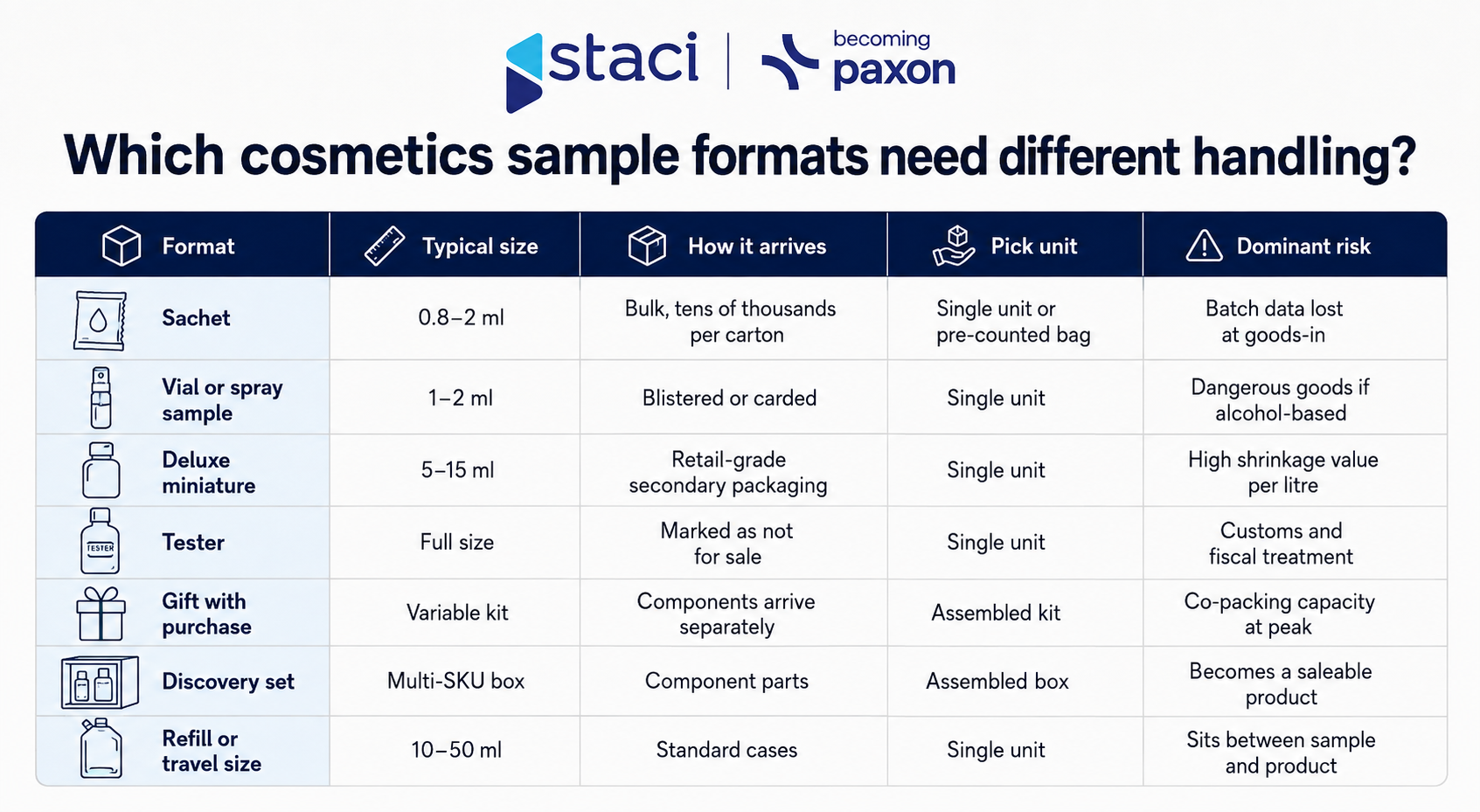
At least seven, and each behaves differently on the floor. Treating them as a single category is the first design error.
Each sample format creates different handling, picking and compliance requirements across the fulfilment process.
The table hides a subtlety worth stating in plain terms. The first four formats are handling problems: tiny, light, easy to miscount, easy to pocket. The last three are manufacturing problems in miniature. A gift with purchase does not arrive as a gift with purchase, it arrives as a mascara, a pouch and a printed insert, on three different purchase orders, and someone has to turn them into one unit before the campaign date.
That someone is usually the logistics operator. Which means sample fulfilment is rarely just picking. It is picking plus light assembly under campaign conditions, against a marketing deadline that was fixed before the components shipped.
Why is sampling volume growing in cosmetics?
Because sampling budgets follow category growth, and the category is growing. Spain’s cosmetics and fragrance industry reached €11,800 million in 2025, up 5.8% on the previous year, according to Stanpa’s 2025 industry review. Exports hit a record €10,124 million, keeping Spain second worldwide in perfume exports.
Two figures inside that release matter more for sampling than the headline does. The first is fragrance. Perfume grew 9.5%, passed €2,400 million and now accounts for 21% of the market, the second largest category, expanding at nearly double the market rate. Fragrance also travels badly through a product page. No swatch, no shade match, no before-and-after. Trial has to happen physically, and outside the store that means a sample.
The second is the selective channel, where perfumeries and specialist retail grew 8.9% and hold 23% of the market. That channel runs on assisted selling, and assisted selling runs on stock at the counter, a continuous replenishment problem rather than a campaign problem.
Meanwhile the point of delivery is shifting. Spanish e-commerce billed more than €114,800 million across 2025, a 20.6% annual rise, on CNMC figures. Every percentage point that moves online moves a sampling decision out of a shop assistant’s hands and into a warehouse rule. The assistant used to choose which sachet went into the bag. Now a business rule does, and a picker executes it, thousands of times a day.
What regulations apply to free cosmetic samples in the EU?
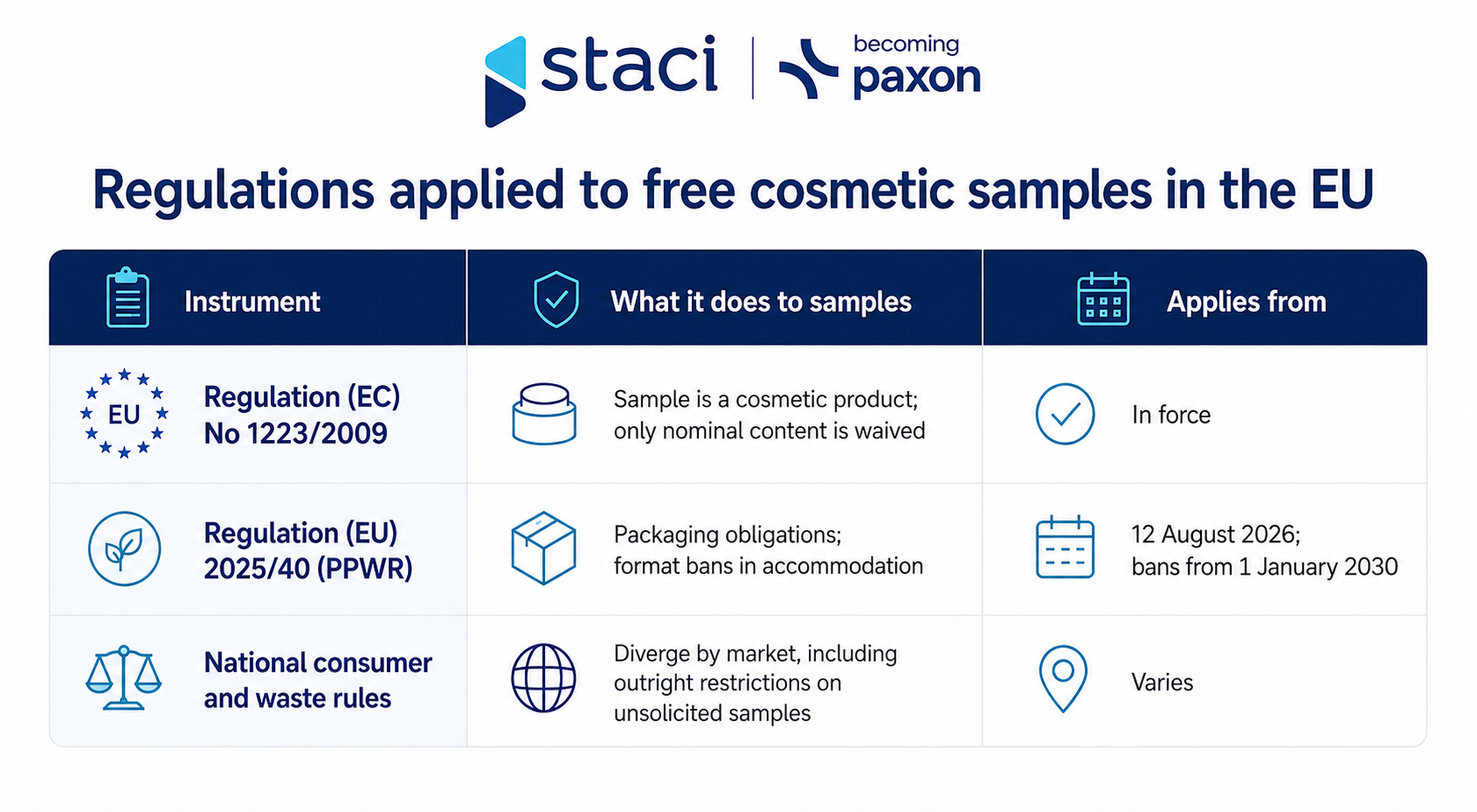
Three frameworks apply at once, and they run on different timetables.
Three regulatory frameworks apply to a free cosmetic sample at once, each with its own timetable.
The labelling exemption is narrower than most teams assume. It covers the nominal content and nothing else, so a sachet still needs its batch reference traceable, and where the surface is too small the information moves to an attached leaflet, tag or card rather than disappearing.
Packaging obligations arrive through the Packaging and Packaging Waste Regulation, (EU) 2025/40, which entered into force on 11 February 2025 and applies from 12 August 2026. A widespread misreading is worth correcting here: the format bans in Article 25 and Annex V do not start in 2026, and they do not start in 2028 either. They start on 1 January 2030, and the beauty-relevant entry covers single-use cosmetic, hygiene and toiletry packaging supplied in accommodation. Retail sachets and counter samples are not named in Annex V.
That is the good news, and it carries a caveat. Samples are still packaging, so they still count towards extended producer responsibility reporting, still need recyclability grades and still add weight to a brand’s packaging declarations, in a format with the worst possible ratio of packaging to content. The pressure on sampling is arriving through reporting and cost, not through prohibition.
The third framework is the one that catches cross-border operations out, because it is not harmonised. France is the sharpest example: supplying a sample to a consumer who has not asked for it is prohibited under its Environment Code, with a first request in distance selling covering later deliveries until the consumer withdraws it. Read that as a data requirement rather than a marketing one.
Somewhere in the order flow there must be a consent flag, it must reach the warehouse, and the pick must honour it. An operator that cannot suppress a sample line per order, per market, cannot run a pan-European sampling programme.
Are perfume samples dangerous goods?
Usually yes. Fine fragrance is alcohol-based, alcohol is flammable, and flammability turns a 2 ml vial into freight with a UN number.
Fragrance falls under UN 1266, perfumery products with flammable solvents, Class 3, under the European Agreement concerning the International Carriage of Dangerous Goods by Road in its 2025 consolidated edition. Part 3 of the ADR sets out the dangerous goods list together with the exemptions tied to limited and excepted quantities, the mechanism that lets small consumer-sized units travel under a lighter regime, provided packaging, marking and quantity thresholds are respected. Air carriage applies a stricter framework again, through the ICAO Technical Instructions and the IATA rules built on them.
Three practical consequences follow, and none of them are visible in a marketing brief. Storage capacity is the first, because flammable stock carries segregation requirements and quantity limits per zone. A warehouse that can hold 40,000 skincare sachets in a mezzanine cannot necessarily hold 40,000 fragrance vials in the same place.
Training is the second, since everyone in the chain needs role-appropriate dangerous goods instruction and consignors above the exemption thresholds need a safety adviser.
The third catches operators out most often, and it happens at order level. A single fragrance vial dropped into an otherwise ordinary parcel can pull the entire shipment into a different transport regime, with different carrier options and different documentation. The picking rule and the shipping rule therefore have to be designed together, or the campaign that ships cleanly in October fails compliance in November.
Why is unit-level picking harder for samples?
Because the economics invert. Sample picking is the same verb as product picking and a completely different job, and the differences compound.
Pick density is the first pressure point. An order line for one sachet consumes the same scan, the same touch and the same confirmation as an order line for a €120 serum, while generating none of the revenue. Efficiency is not a margin question here; it is the entire economics of the service. This is where goods-to-person automation and carousel picking earn their place inside a warehouse built for ecommerce fulfilment, bringing the location to the operator instead of walking an operator to a bin holding items the size of a stamp.
The absence of a sale price then hides the errors. Stock booked without a value tends to escape the controls that protect priced stock, so cycle counts skip it and variances get written off without investigation. The discrepancy surfaces three weeks later, when a campaign ships short.
Batch and expiry still apply regardless. A sample with an unrecorded batch cannot be recalled selectively, so if the batch behind it is withdrawn the only safe response is to withdraw everything, exponentially more expensive than capturing a code at goods-in would have been. The same applies to storage conditions: a sample stored outside the range its formula requires fails just as quietly as one whose batch was never recorded.
Peaks are also sharper than product peaks. Product demand at Christmas rises; sampling demand at a launch goes from zero to the entire allocation in a single week, then back to zero. The staffing curve does not resemble the retail curve at all.
The sector’s own priorities point the same way. In the 2026 MHI Annual Industry Report, produced with Deloitte, 48% of supply chain leaders rated AI’s disruptive impact as significant or greater, up 25 percentage points in a year, with robotics and automation next at 39%. Adoption moved too: 41% said their organisation is now using AI, against 30% the year before.
For sample operations the useful application is unglamorous, forecasting allocation burn, catching count variances early, and sequencing kitting work so that co-packing capacity is not the thing that misses the launch date.
How does sample fulfilment change by channel?
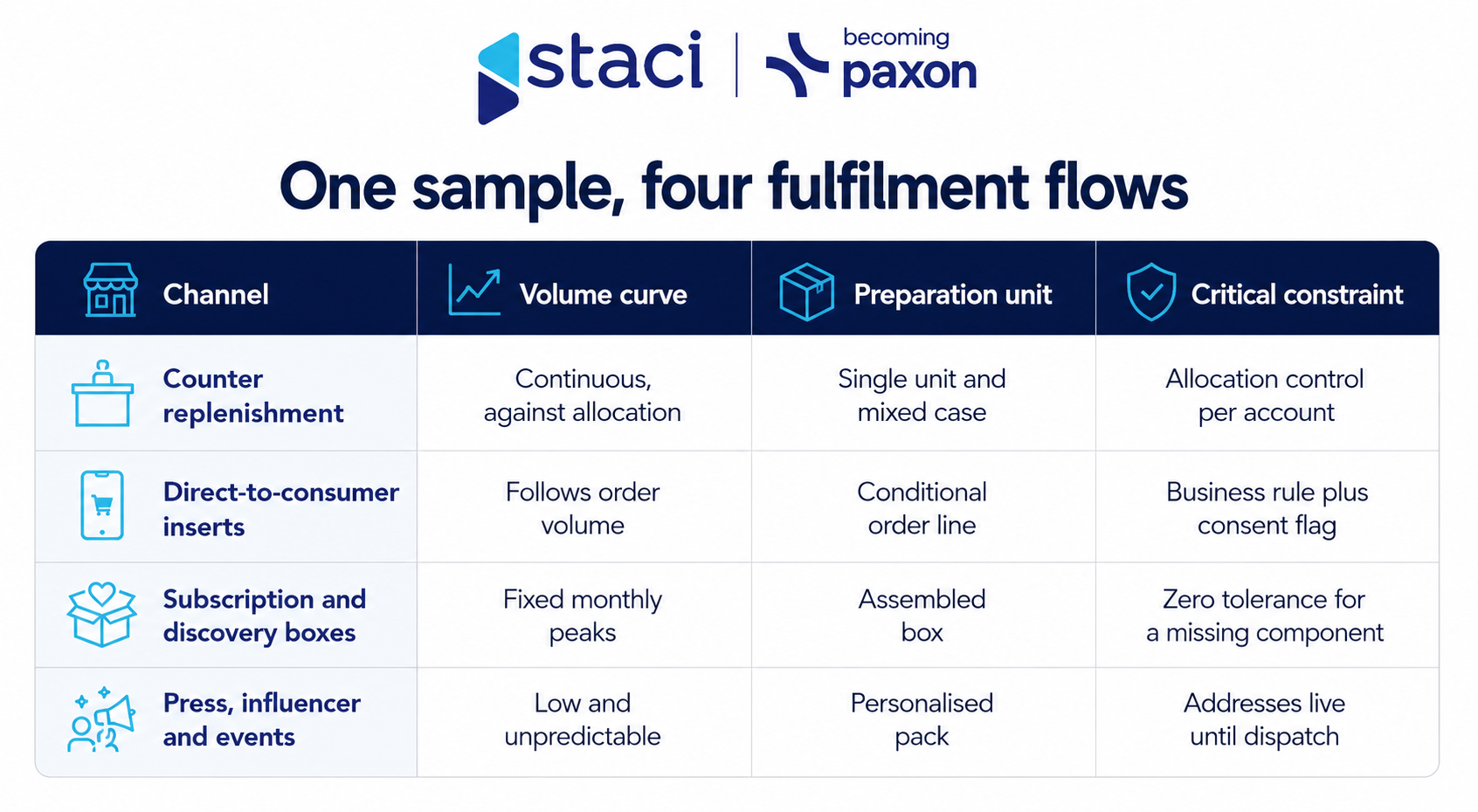
Substantially. The same sachet behaves differently depending on where it is going, and four flows cover most of the work.
The same sample requires different operational flows depending on the channel, volume, preparation needs and critical constraints.
Counter replenishment looks like ordinary stock ordering and is not, because stores draw against an allocation rather than buying. The requirement is a controlled ordering channel that sets who may order, how much, how often and against which campaign budget. Without it, the largest accounts absorb the allocation in the first fortnight and the rest of the network launches empty. Where volumes justify it, cross-docking to retail removes a storage step from the cycle entirely.
Direct-to-consumer inserts move the decision into the order data, where basket value, category purchased, destination market and consent all determine whether a sample line appears. The warehouse reads those attributes and picks accordingly, at speed, without a human deciding case by case.
Subscription and discovery boxes are the point where the sample stops being an add-on and becomes the product. Volumes are high, the assembly is fixed, the date is immovable, and tolerance for a missing component is zero because every box is identical and every subscriber will notice the same gap.
Press, influencer and event seeding inverts all of that. Low volume, high visibility, non-standard packing, addresses that change until the last hour. This flow needs personalisation and courier flexibility far more than it needs throughput. An operator built around only one of these models will force the other three to fit it. That is where cost and error rates come from.
What should you ask a logistics operator for cosmetics samples?
Eight questions separate an operator that handles samples from one that merely stores them. They are worth asking before the pilot, not after.
Can you receive and record batch and expiry data for stock that carries no purchase price?
Can you suppress or add a sample line based on an attribute in the order, per market?
What is your dangerous goods capability for alcohol-based fragrance, by road and by air?
Where does co-packing happen, and what is your assembly capacity in a launch week?
How do you control allocation across stores or sales representatives, and who can see the balance?
What is your pick accuracy on single-unit lines, measured separately from full-product lines?
How is sample stock counted, and how are variances escalated rather than written off?
Can we see consumption by campaign, by market and by requester, without asking you for a report?
That last question is usually the one that decides it. Sampling fails on visibility more often than on execution: the allocation is spent, nobody knows by whom, and the launch in the next market starts short.
Staci, now part of the pan-European Paxon network, runs this flow from its logistics network in Spain, with more than 42,000 sqm dedicated to customer operations and unit-level picking combined with promotional and co-packing capability in the same buildings.
The ordering and visibility layer is Ecats Staci, the group’s own platform, which lets brands hand controlled ordering to their retail network or sales force while keeping stock, allocation and traceability in a single environment. The point is that the marketing view and the warehouse view finally read from the same number.
How Staci approaches the smallest unit in beauty
The sample is the cheapest item a beauty brand ships and the one carrying the most rules per gram. It is a cosmetic product under EU law, packaging under the PPWR, dangerous goods when it contains alcohol, and a consent-dependent delivery in several markets. It is also, quite often, the first physical contact a customer has with the brand.
Treating it as leftover stock is the expensive option. Treating it as its own flow, with its own picking model, its own compliance path and its own visibility, is what turns a marketing budget into a measurable acquisition channel.
If you are reviewing how your samples are stored, assembled and delivered across Europe, talk to the Staci team in Spain about designing that flow properly.
Are cosmetic samples banned in the European Union?
No. There is no EU-wide ban on cosmetic samples. Regulation (EU) 2025/40 prohibits certain single-use packaging formats from 1 January 2030, and the beauty-relevant entry concerns cosmetic and toiletry packaging supplied in accommodation. Retail samples and sachets are not listed in Annex V.
Do cosmetic samples need to be labelled? Yes. A free sample is a cosmetic product under Regulation (EC) No 1223/2009. The only concession is that nominal content need not be declared. Responsible Person, batch identification, durability or period-after-opening, ingredients and warnings all still apply, moving to an attached leaflet or tag where the surface is too small.
Do the rules on cosmetic samples differ between EU countries? Yes. Cosmetics law is harmonised, but consumer and waste rules are not. Several markets restrict unsolicited samples, France being the clearest case, where a sample may only be supplied to a consumer who has asked for it. A sampling programme running across Europe needs market-level rules in the order flow rather than one global rule.
Are perfume samples classified as dangerous goods? Usually yes. Alcohol-based fragrance falls under UN 1266, Class 3, in the ADR. Small consumer-sized units may travel under limited or excepted quantity provisions if packaging, marking and quantity thresholds are respected. Air transport applies stricter rules.
Why can’t standard e-commerce fulfilment handle cosmetics samples? Because samples carry no price, and most fulfilment controls are triggered by price. Valuation, cycle counting, batch capture and variance investigation all key off the commercial transaction. Sample flows need those controls rebuilt around campaign and allocation instead.
What does unit-level picking mean for cosmetics samples? It means the pick unit is a single sachet, vial or miniature rather than a case or a bottle. It requires dense storage, automation or carousel-assisted picking to keep cost per line viable, and accuracy measured separately from full-product picking.
Bibliography
European Parliament and Council of the European Union.Regulation (EC) No 1223/2009 on cosmetic products. EUR-Lex.
Council of the European Union.Regulation (EC) No 1186/2009 setting up a Community system of reliefs from customs duty. EUR-Lex.
European Parliament and Council of the European Union.Regulation (EU) 2025/40 on packaging and packaging waste (PPWR). EUR-Lex.
UNECE – United Nations Economic Commission for Europe.ADR 2025: European Agreement concerning the International Carriage of Dangerous Goods by Road. 2025.
ICAO – International Civil Aviation Organization.Technical Instructions for the Safe Transport of Dangerous Goods by Air.
IATA – International Air Transport Association.Dangerous Goods Regulations (DGR).
STANPA – Asociación Nacional de Perfumería y Cosmética.La industria cosmética supera los 11.800 millones de euros en consumo y consolida su liderazgo exportador en un entorno de alta exigencia global. 2026. Es la fuente utilizada para los datos de mercado español, perfumería, exportaciones y canal selectivo.
CNMC – Comisión Nacional de los Mercados y la Competencia.E-commerce statistics in Spain, 2025. Fuente de los datos sobre facturación y crecimiento del comercio electrónico utilizados en el texto.
MHI & Deloitte.2026 MHI Annual Industry Report. 2026. Fuente de los datos sobre inteligencia artificial, robotics and automation adoption in supply chain operations.
Staci resources
Staci.POS, pharma and campaign materials logistics.
Staci.Good Distribution Practice for advertising and sales campaigns.
Staci.E-commerce warehousing and fulfilment in Spain.
Staci.Temperature-controlled logistics.
Staci.Cross-docking logistics in Spain.
Staci.Ecats Staci.
Spain has become one of the most active fulfillment markets in Europe, and international brands are paying attention. Online retail in the country topped €95 billion in 2024, up 13.1%, and a single quarter, Q3 2025, reached €29,296 million, a 19.3% year-on-year rise, according to Spain’s CNMC. Domestic trade is growing even faster: operations within Spain rose 29.8% to €9,300 million in the same quarter, a sign that the home market is maturing, not just the cross-border one. This guide breaks down what fulfillment actually costs in Spain, what drives those costs, who the main providers are, where to locate, and what foreign companies need to start.
How much does fulfillment cost in Spain?
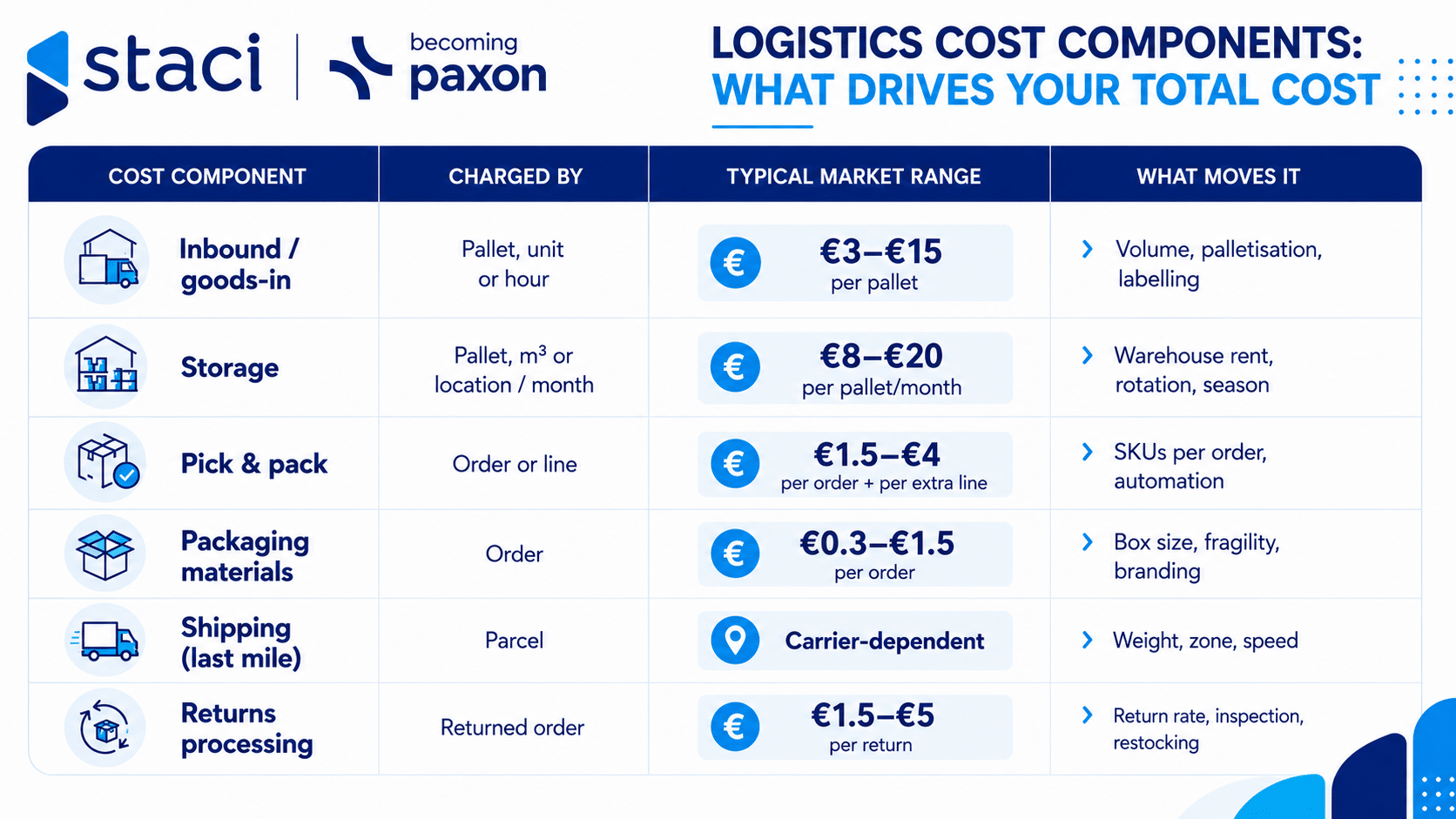
Fulfillment in Spain is not a single price. It is the sum of inbound handling, storage, pick & pack, packaging materials, shipping, and returns processing. Two brands shipping the same volume can pay very different totals depending on inventory rotation, order profile, and location.
The clearest way to read a quote is to separate the fixed structural cost (storage, tied to warehouse rent) from the variable per-order cost (pick & pack, materials, shipping). Storage is the line most exposed to the Spanish property market. Pick & pack and shipping scale with volume.
The table below shows the typical cost components. The storage range reflects published logistics rents; the per-order ranges are typical market figures and should be modelled against your own rotation, not read as a fixed tariff.
How much does fulfillment cost in Spain?
The structural driver underneath storage is warehouse rent, and Spanish rents have climbed. Logistics headline rents in Spain grew around 10% in 2024, well above the EMEA average, according to Cushman & Wakefield. By the close of 2025, prime rent in Madrid stood at €7.25/m²/month, per CBRE. One offset works in Spain’s favour: Cushman & Wakefield notes the country has more competitive labour and electricity costs than most peer European markets, which keeps operating costs in check even as rents rise.
A simple worked example shows how the components combine. A brand shipping 2,000 orders a month, holding 30 pallets of stock with one item per order, might see roughly €300–€600 in storage, €3,000–€8,000 in pick & pack, plus materials, shipping and returns on top. The same brand at 6,000 orders a month spreads its fixed storage and technology fees over three times the volume, so the cost per order falls even though the monthly bill rises. The figures are illustrative, not a quote, but the mechanism is the point: volume and rotation, not the headline pick rate, decide your real cost.
This is also why two quotes are hard to compare at face value. A provider with a low pick rate but a high monthly storage charge per pallet can cost more in total than one with a slightly higher pick rate and efficient slotting. The only reliable comparison models storage cost per order using your own inventory rotation, not the example scenario in the provider’s rate card. Brands that skip this step often switch operators within six months because the total never matched the quote.
What makes fulfillment in Spain cheaper or more expensive?
The biggest swing factor is order volume. Technology fees, minimum storage charges, and goods-in costs are largely fixed, so as orders rise, the cost per order falls, up to the point where a warehouse hits capacity. Below that point, low volume means fixed costs are spread thin and the per-order cost looks high.
Four other variables move the total:
Inventory rotation. Slow-moving stock sits longer and accrues more storage cost. Fast rotation lowers the storage cost embedded in each order.
Return rate. Online returns in Europe commonly run between 25% and 40%, according to Mordor Intelligence far above in-store levels, and premium apparel can reach 37.5%. Each return carries inbound, inspection, and restocking cost.
Location and land scarcity. Prime space is tight. In Barcelona’s ZAL, vacancy sits at around 1.3%, which keeps rents, and therefore storage costs, high, according to Cushman & Wakefield.
Delivery-speed expectations. In the 2025 Third-Party Logistics Study by NTT DATA, Penske and Penn State, 48% of shippers said customers routinely expect delivery in under two days. Faster promises raise carrier and network cost.
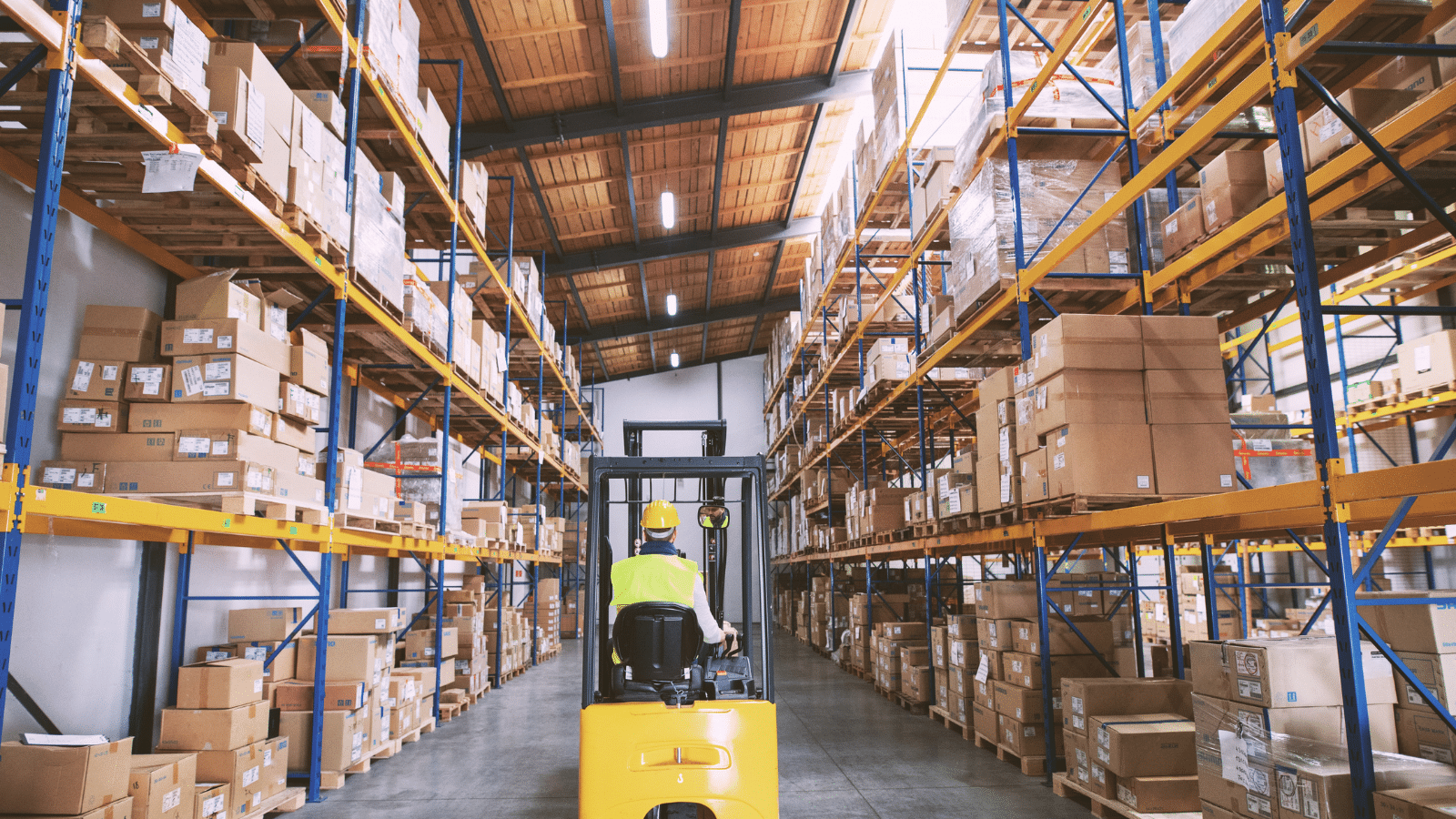
Warehouse operative working inside a warehouse
The fulfillment market in Spain: size and momentum
Spain’s logistics real estate market is expanding, which matters to anyone outsourcing fulfillment: more modern space and more competition among operators. Investment in the industrial and logistics sector reached €1.3 billion in 2025, according to CBRE, with Barcelona and Madrid accounting for nearly 70% of the volume.
Take-up confirms the demand. The Central (Madrid) region exceeded one million m² of absorption in 2025, while Catalonia contracted 615,000 m². Momentum carried into 2026: Madrid passed 310,000 m² and Barcelona 235,000 m² of take-up in Q1 2026, with prime rents hitting new highs, per Cushman & Wakefield.
Outsourcing pays off when the partner is the right one. In the same NTT DATA study, 82% of shippers said 3PLs improved customer service and 66% said they reduced overall logistics costs, though 89% rating their relationships «successful» shows the result depends on partner fit, not on outsourcing alone.
Technology is now a deciding factor in that fit, and it feeds back into cost. In the NTT DATA study, 68% of shippers requested control-tower visibility, up from 49% the year before, and 61% said change-management capability was essential to adopting new technology. For a brand, this means a modern provider’s visibility and automation are not extras: they reduce errors, cut returns, and lower the cost per order over time. A cheaper operator without these tools can end up more expensive once mistakes and manual handling are counted.
Who are the main fulfillment providers in Spain?
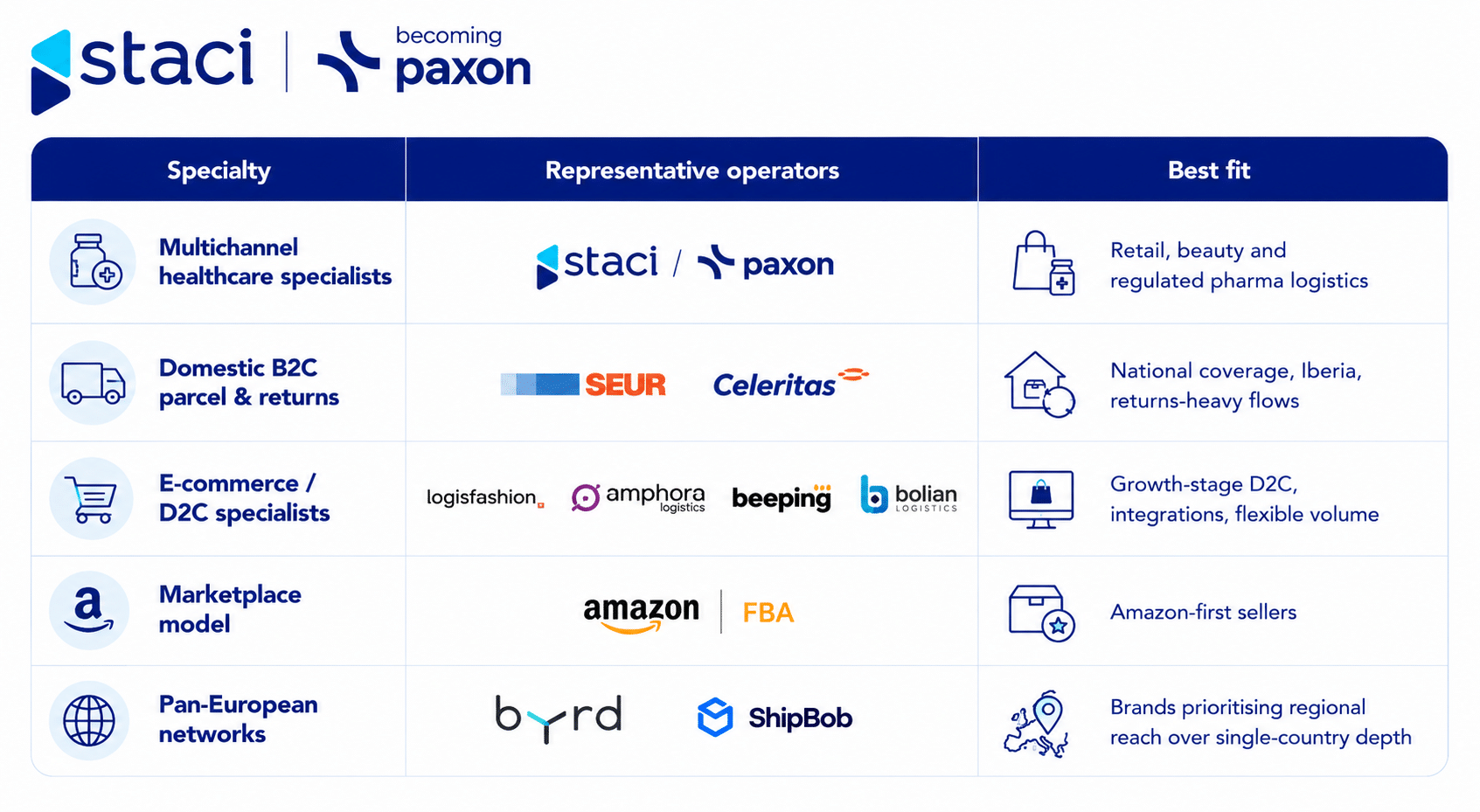
The Spanish market splits into clear specialties. Choosing well means matching your product and order profile to the right type of operator rather than to the biggest name. The providers below are grouped by what they are known for.
The Spanish market splits into clear specialties.
A few distinctions are worth keeping in mind. Global integrators such as DHL Supply Chain, UPS and FedEx Logistics bundle warehousing with their own transport networks and serve many sectors at scale. Domestic parcel and returns specialists like SEUR and Celeritas focus on B2C delivery across Spain and Portugal. E-commerce specialists including Logisfashion (fashion), Amphora Logistics, Beeping and Bolian Logistics target D2C brands with platform integrations and flexible volume tiers. Amazon FBA suits sellers whose demand is concentrated on the marketplace. Pan-European networks such as byrd and ShipBob prioritise regional coverage over single-country operational depth.
Beyond specialty, four questions separate a partner from a vendor: Does the provider give live inventory and order visibility, or only status emails? What is the onboarding timeline and who owns it? How are peak-season surcharges and minimums structured? And can the operator scale with you without forcing a costly mid-contract migration? The right answers matter more than the lowest headline rate, because the true cost of fulfillment surfaces in returns, errors and peak handling, not in the pick fee alone.
What is the best location for a fulfillment center in Spain?
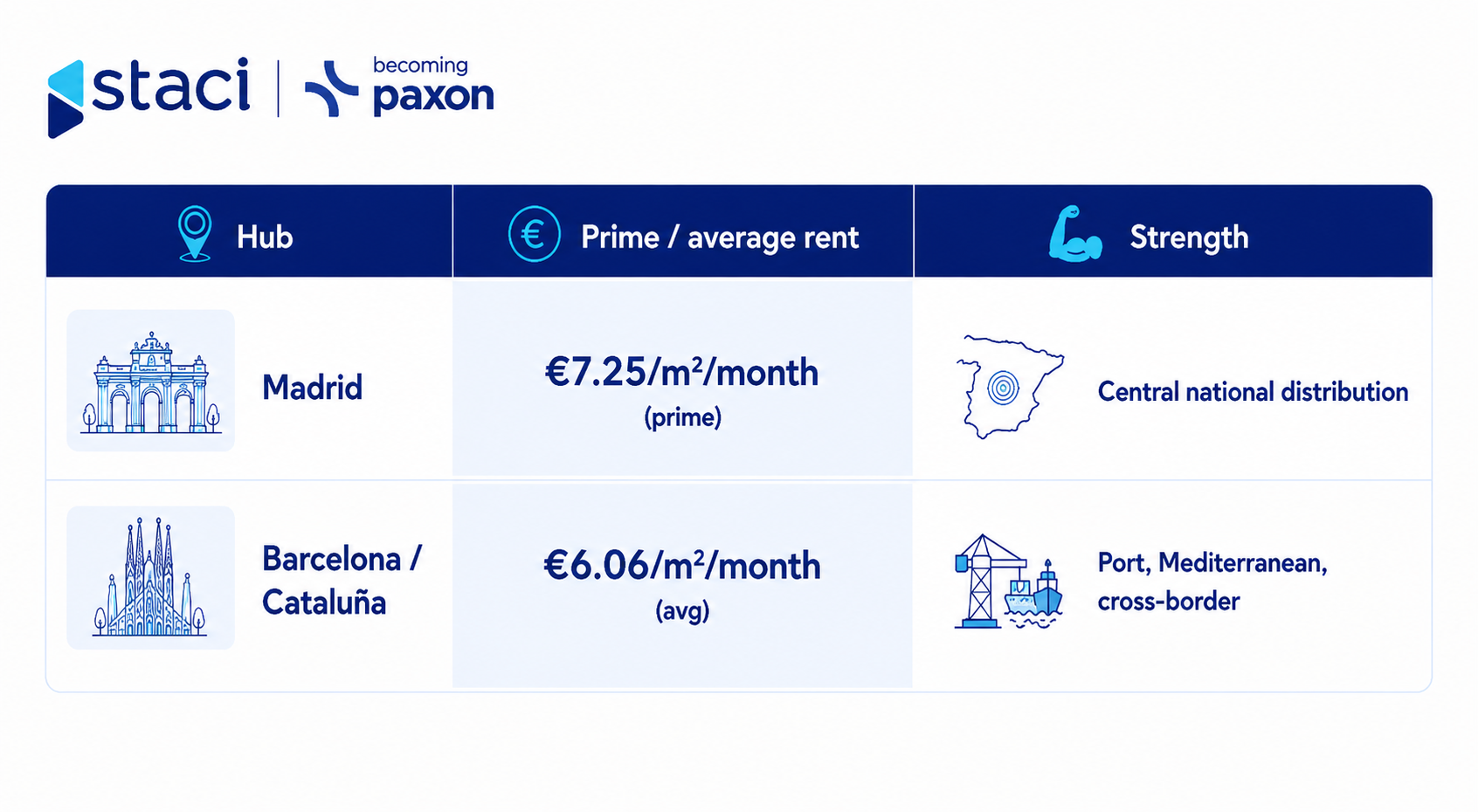
The best location depends on your customer base and import flow, but two hubs dominate. Madrid offers central national reach; Barcelona adds Mediterranean access, a major port, and cross-border flows to France and the rest of the EU; Cost and availability vary by hub. At the end of 2025, prime rent was €7.25/m²/month in Madrid and €6.06/m²/month on average in Barcelona, per CBRE and Cushman & Wakefield.
The best location depends on your customer base and import flow, but two hubs dominate.
For brands serving the whole country, a central Madrid-area platform plus a Catalan node is a common pattern. Staci operates fulfillment platforms in northeast Spain and in Alcalá de Henares (Madrid), covering both poles. Barcelona’s role as a southern-Europe gateway is examined in Cross docking en Barcelona.
Availability shapes the decision as much as price. Tight vacancy in prime Barcelona and a pipeline of 730,000 m² under construction in the Central region for 2026, per CBRE, mean modern space is contested and rents stay firm. There is also a trade-off between national distribution and last-mile speed: a single central hub minimises storage duplication, while a second node closer to dense urban demand cuts delivery time and last-mile cost. Which wins depends on whether your customers expect next-day delivery or accept a standard two-to-three-day window.
Can foreign companies store and sell products in Spain?
Yes. Foreign companies can store and sell products in Spain, and many do. The key obligation is tax registration: storing stock in a Spanish warehouse, including one rented from a 3PL, creates a taxable presence and triggers Spanish VAT (IVA) registration. Spain applies a zero registration threshold for non-resident businesses, so the obligation begins with the first taxable activity, not after a sales level.
The path differs by origin. EU-based companies can register for Spanish VAT directly. Non-EU companies must appoint a Spanish fiscal representative, unless a tax-cooperation agreement applies. Both need an EORI number to move goods across the EU customs border, mandatory for customs clearance per the European Commission. Operators not established in the EU must still register for customs activities in the Member State of their first operation.
VAT does not always mean a separate filing burden in every market. Selling to consumers across the EU, a brand can use the One-Stop Shop (OSS) to declare cross-border B2C sales through a single return once it passes the EU-wide €10,000 threshold, rather than registering in each country. But OSS does not remove the Spanish registration that storing stock here creates; the two are separate obligations. For B2B sales to Spanish VAT-registered companies, the reverse-charge mechanism usually shifts the VAT accounting to the buyer, so the obligations depend on whether you sell to consumers, businesses, or both, and on where your stock sits.
What documents do you need to start fulfillment in Spain?
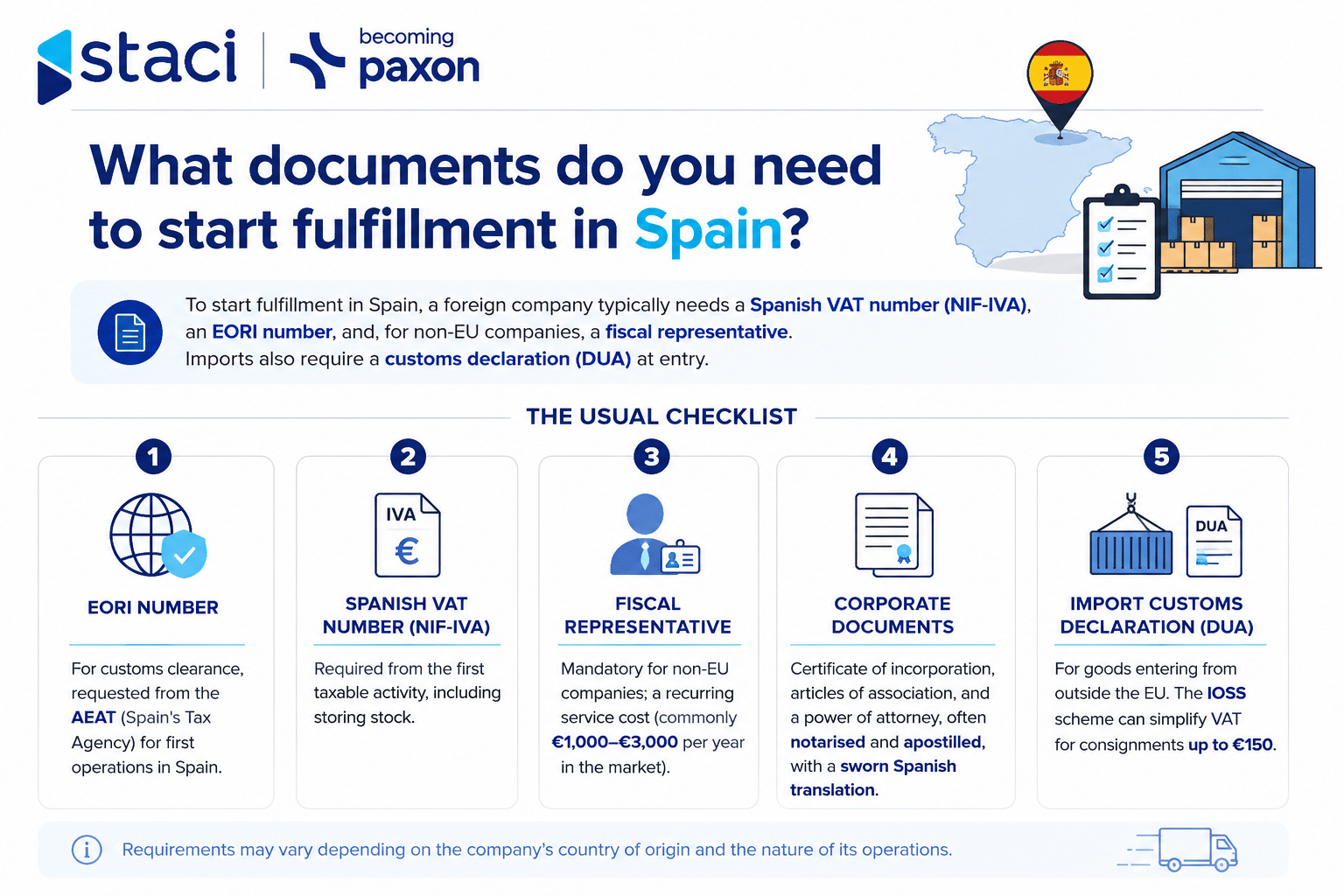
The paperwork follows a clear sequence. You will need an EORI number for customs clearance, requested from the AEAT, Spain’s Tax Agency, for your first operations in the country. You also need a Spanish VAT number (NIF-IVA), required from the first taxable activity, which includes storing stock. Non-EU companies must additionally appoint a fiscal representative, a recurring service that commonly runs €1,000–€3,000 per year. On the corporate side, expect to provide your certificate of incorporation, articles of association and a power of attorney, often notarised and apostilled and accompanied by a sworn Spanish translation. Finally, goods entering from outside the EU need an import customs declaration (DUA), and the IOSS scheme can simplify VAT on consignments up to €150.
What documents do you need to start fulfillment in Spain?
VAT registration usually takes a few weeks once documents are in order, so register before shipping stock to avoid clearance and import-VAT delays.
Sequencing matters for cash flow as well as compliance. Importers pay VAT at the border, and a correctly registered company can reclaim that import VAT through its Spanish returns, so getting the NIF-IVA and EORI in place before the first shipment avoids both clearance hold-ups and blocked reclaims. Spain does not allow the «global» or limited fiscal-representation VAT numbers used in some EU countries, which is one more reason to confirm the exact registration path with your fiscal representative or customs agent before stock leaves origin.
Can I integrate Shopify with a Spanish fulfillment provider, and do they handle returns?
Yes on both counts. Most modern Spanish fulfillment providers integrate with Shopify, WooCommerce and major marketplaces through their warehouse management system, synchronising orders, inventory and tracking automatically. Staci’s proprietary platform, E-CATS, gives brands marketplace-builder functionality with client-side control over products, pricing and promotions, and is ISO 27001 certified.
Returns management is part of standard scope for most operators, and it is not a minor line. With European online return rates in the 25%–40% range, reverse logistics, inspection and restocking directly affect your cost per order. Confirm how a provider charges for returns before signing, since flat per-return fees and per-step charges produce very different totals.
The way to control returns cost is to model it like any other line. A flat receiving fee looks simple but hides the real work: inspection, repackaging, restocking, and disposal of unsellable items each carry cost. For categories with high return rates, such as apparel and footwear, returns can quietly become one of the largest items in the fulfillment bill. Providers that automate the returns portal and reintegrate stock quickly keep that cost down; those that handle it manually pass the inefficiency back to you. Treat returns capability as a pricing question, not an afterthought.
FAQ
How much does fulfillment cost in Spain? There is no single price. Cost is the sum of inbound, storage, pick & pack, materials, shipping and returns. Storage is tied to warehouse rent, which reached €7.25/m²/month prime in Madrid at the end of 2025. Per-order fees depend on volume, SKUs and rotation, so quotes should be modelled against your own order profile.
Can foreign companies store products in Spain? Yes. Storing stock in a Spanish warehouse, including a 3PL’s, triggers Spanish VAT registration under a zero threshold. EU companies register directly; non-EU companies must appoint a fiscal representative.
What is the best location for a fulfillment center in Spain? Madrid for central national reach, Barcelona/Catalonia for port and cross-border flows, and Valencia for the Mediterranean corridor. The choice follows your customer base and import route.
Can I integrate Shopify with a Spanish fulfillment provider? Yes. Most providers integrate with Shopify, WooCommerce and marketplaces via their WMS, syncing orders and stock automatically.
Does fulfillment in Spain include returns management? Usually yes. Reverse logistics is standard scope, which matters because European online return rates run 25%–40%. Always confirm the returns pricing model.
What documents are needed to start fulfillment in Spain? An EORI number, a Spanish VAT number (NIF-IVA), corporate documents (often notarised, apostilled and translated), a fiscal representative for non-EU companies, and a customs declaration (DUA) for imports.
NTT DATA, Penske & Penn State -2025 Third-Party Logistics Study (29th Annual)
Mordor Intelligence – Spain E-commerce Market
European Commission (Taxation & Customs Union) -EORI:
AEAT (Agencia Tributaria) EORI
Este sitio utiliza cookies para recordar sus preferencias y optimizar su experiencia.
Al hacer clic en "HE ENTENDIDO", acepta la instalación de estas cookies y cierra este banner.
También puede elegir "VER DETALLE" para tener una descripción de las cookies instaladas por categoría.
Este sitio utiliza cookies para mejorar su experiencia de navegación. Estas cookies se clasifican a continuación por categoría. Consulte nuestra política de cookies y datos personales: page "Política de privacidad y cookies".
Las cookies funcionales permiten al sitio web guardar sus preferencias. Estas cookies nos permiten garantizar una comodidad de uso óptima durante su visita y no requieren su consentimiento.
Cookie
Duración
Descripción
pll_language
1 year
Esta cookie es establecida por el plugin Polylang para sitios web con WordPress. La cookie almacena el código de idioma de la última página visitada.
wpc_*
1 day
wpc_* cookies son depositadas por el plugin WP Cerber. su propósito es proteger el sitio mediante la detección y mitigación de la actividad maliciosa (Anti spam). En estas cookies no se almacenan datos personales.
Las cookies necesarias son útiles para el buen funcionamiento del sitio. Esta categoría incluye solo las cookies que garantizan la funcionalidad básica y los elementos de seguridad del sitio web. Estas cookies no almacenan ninguna información personal.
Cookie
Duración
Descripción
cookielawinfo-checkbox-functional
1 year
Esta cookie está definida por el plugin aplicado en nuestro Sitio web Se utiliza para anotar el depósito de cookies en la categoría "Funcional".
cookielawinfo-checkbox-necessary
1 year
Esta cookie está definida por el plugin aplicado en el Sitio Web. Se utiliza para anotar el depósito de las cookies en la categoría "Necesario".
cookielawinfo-checkbox-statistics
1 year
Questo cookie è impostato dal plugin applicato sul Sito Web. Viene utilizzato per registrare il deposito dei cookie nella categoria "Statistiche".
CookieLawInfoConsent
1 year
Esta cookie está definida por el plugin utilizado por el Sitio web. CookieYes define esta cookie para almacenar la configuración del usuario.
TS01*
session
La cookie TS01 ayuda a gestionar el tráfico web. Permite que funcione el equilibrio de carga: gestión del tráfico de usuarios con respecto a los servidores.
viewed_cookie_policy
11 months
Esta cookie es definida por el plugin aplicado en el Sitio web y se utiliza para anotar las opciones del usuario. No almacena ningún dato personal.
Estas cookies se utilizan para realizar estadísticas de medición de audiencia y rendimiento del Sitio (datos anónimos). Estudio del comportamiento de los visitantes para mejorar el rendimiento del Sitio.
La recogida de su consentimiento no es necesaria, ya que utilizamos una solución (Matomo) de análisis de audiencia, configurada según las recomendaciones de la CNIL.
Cookie
Duración
Descripción
_pk_id.*
1 year 27 days
Matomo utiliza por defecto cookies propias, establecidas en el dominio del sitio. Las cookies creadas por Matomo comienzan con: _pk_ref, _pk_cvar, _pk_id, _pk_ses. Ver una lista de todas las cookies de Matomo : https://matomo.org/faq/general/faq_146/
_pk_ses.*
30 minutes
Esta cookie de Matomo almacena de forma predeterminada un ID de sesión único. Matomo utiliza cookies propias, establecidas en el dominio del sitio. Las cookies creadas por Matomo comienzan con: _pk_ref, _pk_cvar, _pk_id, _pk_ses. Ver una lista de todas las cookies de Matomo : https://matomo.org/faq/general/faq_146/