

Spain has quietly become one of Europe’s most efficient entry points for goods. Its port system handled 18.1 million TEUs of container traffic in 2024, and its geographic position -between the Atlantic, the Mediterranean and North Africa- makes it a natural staging ground for companies distributing across the continent. For fast-moving goods, that advantage is only unlocked with the right operating model. This is where cross docking, and the logistics company behind it, makes the difference.
If you sell across Spain and Europe, choosing a cross docking logistics company in Spain can cut storage time, accelerate delivery and simplify a supply chain that spans multiple channels and countries. It is important to know what cross docking is, when it pays off, how it compares to warehousing and fulfillment, and how to select a provider -with Staci, now part of the pan-European Paxon network-, as a reference point.
When should your company use cross docking instead of warehousing?
Use cross docking when your goods move fast, demand is reasonably predictable, delivery speed is critical, or storage costs are eating into your margin. Use traditional warehousing when you need buffer stock, long holding periods, or safety inventory to absorb uncertainty. Most supply chains need both, the skill is knowing which flow belongs where.
In Spain, the cost argument has sharpened. Warehouse space is scarce and getting more expensive: prime logistics rent in Barcelona reached €9.25/m²/month at the end of 2025, with availability down to just 2.92%, while Madrid’s Central Zone climbed to €7.25/m²/month, according to CBRE. When quality space is this tight, every pallet that skips storage and moves straight to dispatch is money saved.
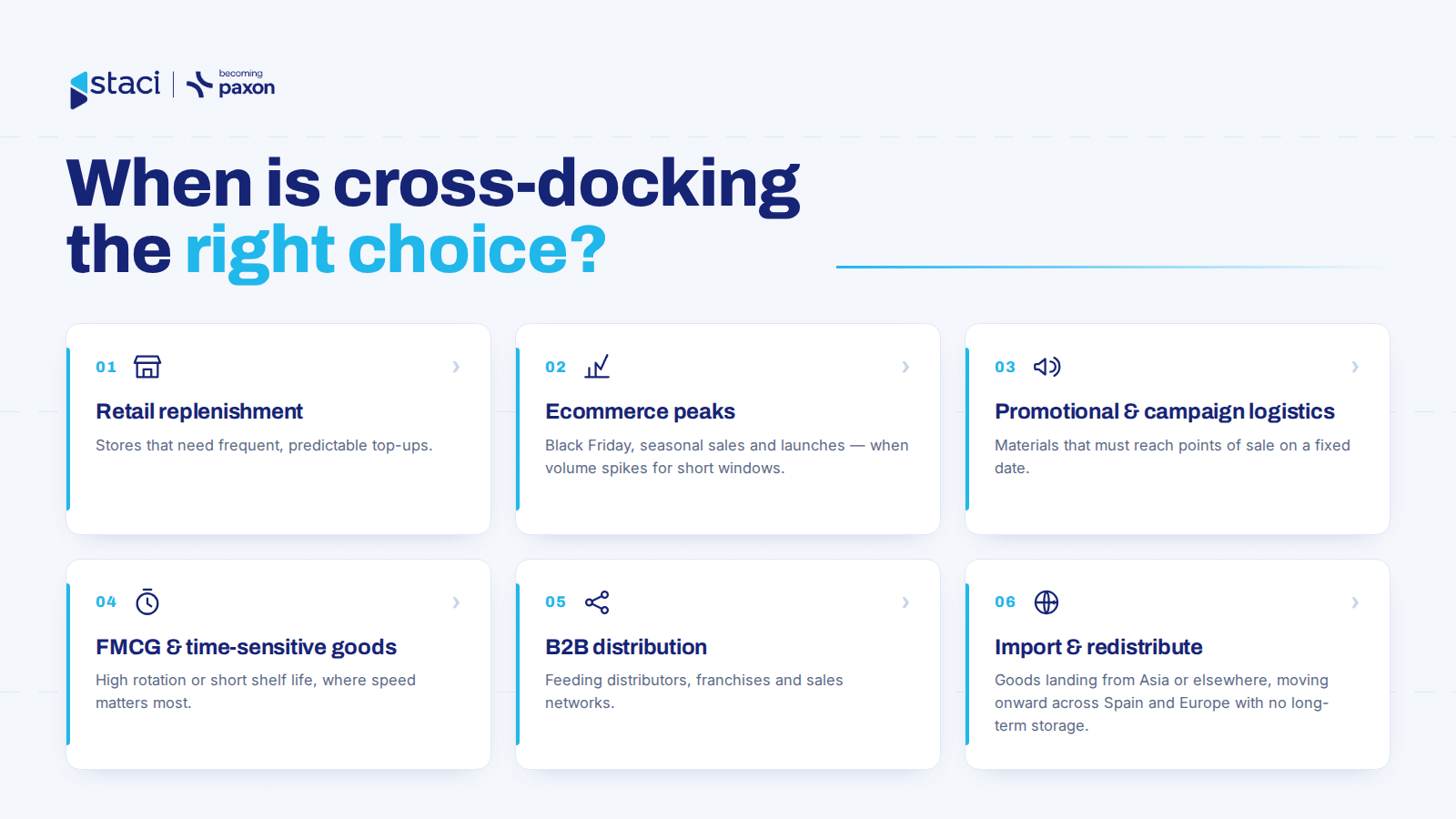
Cross docking tends to pay off in these situations:
- Retail replenishment, where stores need frequent, predictable top-ups.
- Ecommerce peaks– Black Friday, sales seasons, product launches- when volume spikes for short windows.
- Promotional and campaign logistics, where materials must reach points of sale on a fixed date.
- FMCG and time-sensitive goods with high rotation or short shelf life.
- B2B distribution to distributors, franchises or sales networks.
- Import-and-redistribute flows, where goods arrive from Asia or elsewhere and move onward across Spain and Europe without needing long-term storage.
The takeaway: cross docking is not a replacement for warehousing but a complementary flow. The right logistics company runs both under one roof and routes each product line through whichever model protects speed and cost.
What are the main benefits of cross docking for international companies?
The main benefits of cross docking are faster distribution, lower storage costs, less product handling, better stock rotation and more efficient transport. Together, they translate into a supply chain that reacts quicker to demand and ties up less capital in inventory, a decisive advantage when you operate across several countries.
The cost impact is measurable. In the 2026 Annual Third-Party Logistics Study, 75% of shippers reported that working with a third-party logistics provider reduces their overall logistics costs, up from 66% the year before. Cross docking is one of the clearest levers behind that figure: every step of storage, put-away and picking you remove is a cost you stop paying.
Speed is the second half of the equation. In direct-to-consumer and retail models, what the customer notices is the click-to-delivery window. By synchronising inbound and outbound flows, cross docking compresses that window without forcing you to hold stock closer to the customer. For an international company, the benefits stack up as follows:
- Faster time to market across Spain and Europe, with fewer intermediate steps.
- Lower fixed logistics costs, since less space and handling are required.
- Improved transport efficiency, consolidating loads by route and destination.
- Greater agility during demand peaks, launches and promotional campaigns.
- Reduced risk of obsolescence for high-rotation and short-shelf-life goods.
What is a cross docking logistics company, and how does it work?
A cross docking logistics company receives goods at a logistics platform, sorts and consolidates them, and ships them straight to their next destination with little or no storage in between. The goal is simple: keep products moving. Instead of holding stock on shelves for days or weeks, inbound deliveries are synchronised with outbound shipments so that merchandise «crosses the dock» and leaves within hours.
In practice, the flow follows four steps. Goods arrive at inbound docks from suppliers or import shipments; they are checked and quality-controlled; they are sorted by final destination, a store, a distributor, a marketplace or an end customer, and they are loaded onto outbound transport for immediate dispatch.
There are three common models. In direct (pre-distributed) cross docking, the supplier has already labelled and grouped goods by destination, so the operator simply receives and forwards them. In consolidated cross docking, mixed inbound shipments are regrouped by order or route before dispatch. In hybrid cross docking, freshly arrived goods are combined with items already held in the warehouse -the most complex variant, and the one that benefits most from an experienced operator with integrated fulfillment and reverse logistics services in Spain.
Cross docking vs warehousing vs fulfillment: what’s the difference and where does 3PL fit?
The three models solve different problems. Warehousing stores and manages stock over time. Cross docking moves goods through a platform with little or no storage. Fulfillment covers the full order cycle for the end customer: storage, picking, packing, shipping and returns. They are not competitors, a mature operation uses all three, routing each product line through the right one.
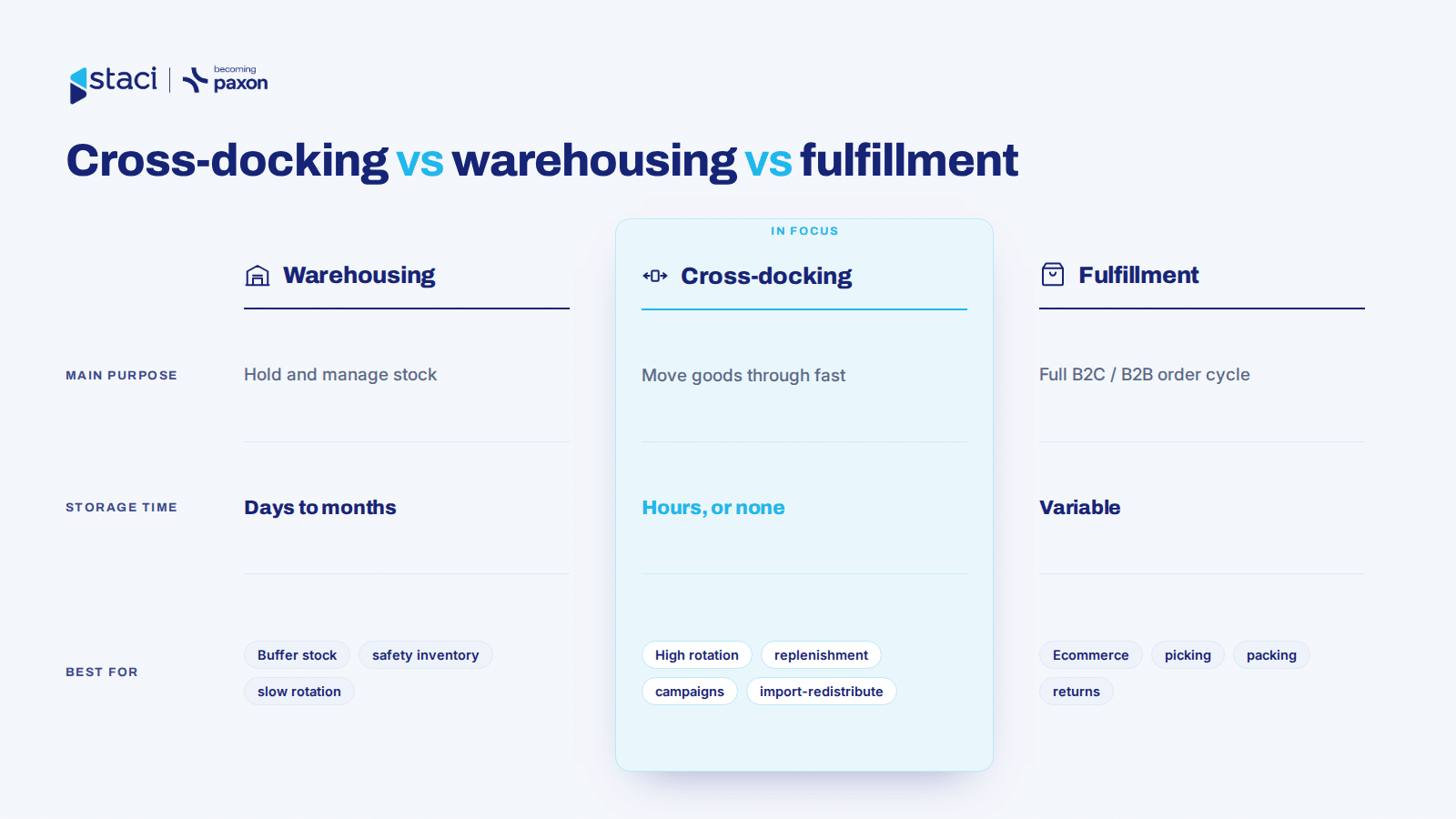
In prose: choose warehousing when you need a buffer against uncertainty, cross docking when speed and flow matter more than holding stock, and fulfillment when someone has to pick, pack and ship individual orders to customers. And 3PL? A third-party logistics provider is not an alternative to these operations, it is the partner that runs them for you. The strongest 3PLs combine warehousing, cross docking and fulfillment under one contract, so you can shift volume between them as your business changes.
Which companies and sectors need cross docking in Spain?
Cross docking in Spain is most valuable for companies with high-rotation goods and time-sensitive distribution: ecommerce brands, retailers, FMCG and consumer-goods manufacturers, marketplaces, promotional-logistics operations, B2B distributors and international companies using Spain as an entry point to Europe.
The demand context explains why. Spanish ecommerce billed more than €114.8 billion in 2025, a 20.6% increase year on year, according to the CNMC, a market growing at double digits and pushing brands toward faster, leaner distribution. When order volumes rise this quickly, holding everything in long-term storage becomes a bottleneck; cross docking keeps goods moving.
Typical profiles that benefit include:
- Ecommerce and marketplaces managing volume spikes and fast delivery promises.
- Retail chains and franchises needing frequent, predictable store replenishment.
- FMCG and food brands with high rotation or cold-chain requirements.
- Cosmetics, electronics and automotive distributors handling multi-supplier flows.
- International brands importing goods and redistributing them across the Iberian Peninsula and Europe.
Can Spain be used as a hub for cross docking and European distribution?
Yes, Spain is one of the most logical entry points into Europe, and cross docking is how companies unlock that position. Sitting between the Atlantic, the Mediterranean and North Africa, Spain offers deep-water ports, a mature road and rail network and direct routes into the rest of the continent.
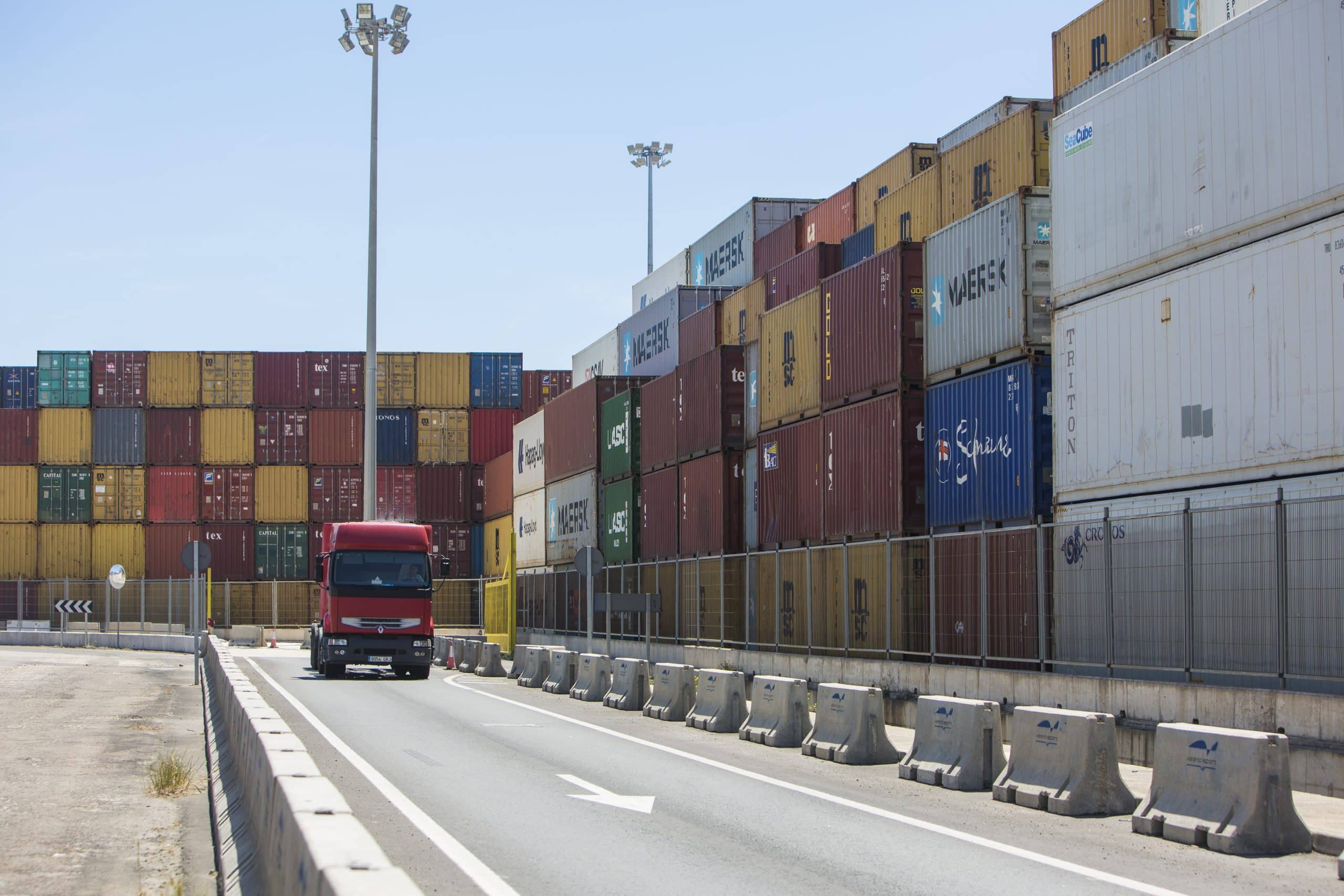
The port data makes the case. In 2024, the ports of Algeciras, Valencia and Barcelona together moved 255.1 million tonnes – 46% of all Spanish port traffic, according to Puertos del Estado. Valencia and Barcelona in particular act as Mediterranean gateways for goods arriving from Asia, and the rerouting of trade away from the Red Sea has recently pushed even more Asia-origin traffic through Spanish terminals. For a brand importing from Asia and selling across Europe, that means goods can land, be cross docked and move onward, without an expensive storage stop.
This is where a pan-European operator matters. Staci, now part of the pan-European Paxon network, runs 8 logistics centres across Madrid and Barcelona totalling more than 42,000 m², connected to a network of 90+ platforms across Europe, the United States and Asia. Goods entering through Spain can be cross docked locally and distributed through the same network into Germany, France, Italy, the Netherlands and beyond, with sister brands Active Ants, Base Logistics and Radial extending reach under the unified Paxon 3PL brand.
Is cross docking a more sustainable logistics model?
Cross docking can significantly lower the environmental footprint of distribution, because it removes storage steps and consolidates shipments, which means fewer trips, fuller trucks and less energy spent handling and holding stock. For companies under growing pressure to cut supply-chain emissions, that makes it more than an efficiency play; it is a sustainability lever.
The context is hard to ignore. Road transport is the single largest source of transport emissions in the EU, and transport as a whole accounts for roughly a quarter of the bloc’s CO₂ emissions, over 70% of it from road, according to European Environment Agency data cited by the European Parliament. Freight is a big part of that: goods transport alone represents more than 30% of transport CO₂ emissions, and the EU is tightening heavy-vehicle CO₂ targets to -45% by 2030 and -90% by 2040. For any company moving products across Europe, emissions are becoming a compliance and cost issue at once.
Cross docking helps on several fronts:
- Fewer, fuller loads. Consolidating inbound goods by route and destination reduces the number of vehicles on the road and cuts empty-running kilometres.
- Shorter, optimised routes. Sorting at a well-located platform lets an operator dispatch by the most efficient route rather than shipping stock back and forth.
- Lower warehouse energy use. Goods that cross the dock in hours consume far less space, lighting, heating and handling than goods sat in storage for weeks.
- Less waste and obsolescence. Faster rotation reduces the risk of unsold or expired stock, especially for food, cosmetics and other short-shelf-life products.
The impact is greatest when cross docking runs on a dense distribution network. The closer your platforms sit to import gateways and consumption hubs, the fewer kilometres each shipment travels. A pan-European operator can consolidate flows across borders and route them through the nearest platform, rather than duplicating long-haul trips. This is where Staci, now part of the pan-European Paxon network, combines a Spanish footprint near the main ports with European-wide fulfillment and distribution services to keep both cost and carbon down.
Sustainability is also becoming measurable and reportable. With the EU moving toward a common method for calculating transport emissions (EN ISO 14083), companies increasingly need reliable emissions data from their logistics partners, not just estimates. A cross docking provider with real-time visibility and integrated reporting can supply that data, turning a leaner operation into a documented environmental gain. For international brands, choosing the right cross docking logistics company in Spain is therefore not only about speed and cost; it is part of a credible decarbonisation strategy.
What technology is needed to manage cross docking operations?
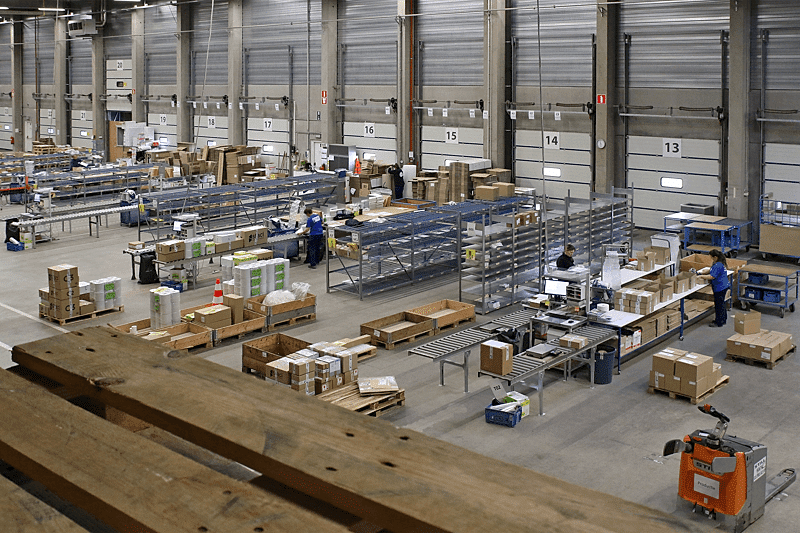
Cross docking only works when inbound and outbound flows are perfectly synchronised, and that requires technology: real-time visibility, a warehouse management system, inbound and outbound coordination, SLA monitoring and integration with your ERP, ecommerce platform and marketplaces. Without live data, «crossing the dock» turns into bottlenecks at the loading bay.
Shippers now treat this as non-negotiable. The 2025 Third-Party Logistics Study found that 74% of shippers would switch 3PL provider based on technology and AI capabilities, visibility and data are no longer a nice-to-have, they are a selection criterion.
Staci manages these flows through Ecats Staci, its proprietary platform, which is ISO 27001 certified, updated automatically every month and built for rapid deployment. It gives clients real-time control of stock and orders, full autonomy over products, pricing, promotions and users, and integration with client systems, the operational backbone that keeps cross docking, fulfillment and distribution running as one coordinated flow.
How do you choose a cross docking provider in Spain, and what should it offer?
To choose a cross docking provider in Spain, evaluate logistics coverage, platform capacity, technology and traceability, SLA management, sector experience, integration capabilities, the ability to absorb demand peaks, and -crucially- complementary services such as fulfillment and reverse logistics. A cross docking capability on its own is rarely enough; what you want is a partner that can run your whole flow.
There is a clear market trend behind this. In the 2026 Annual Third-Party Logistics Study, 50% of shippers said they are consolidating the number of 3PL partners they use, giving each remaining partner a larger share of business. Companies are moving away from juggling several niche providers toward fewer, deeper partnerships that cover more of the supply chain.
Use this checklist when comparing providers. A strong cross docking logistics company in Spain should offer:
- Inbound and outbound coordination with sorting, consolidation and quality control.
- Real-time tracking and reporting, with visibility into every SLA.
- Strategic locations near the main import gateways and consumption hubs (Madrid, Barcelona).
- System integration with your ERP, ecommerce and marketplace platforms.
- Peak-demand scalability, proven across campaigns and seasonal spikes.
- Complementary services – warehousing, fulfillment, pick and pack, kitting, co-packing and reverse logistics -under one roof.
- Sector experience relevant to your products, from FMCG to cosmetics or electronics.
Why choose a 3PL in Spain with cross docking, fulfillment and reverse logistics?
Choosing a 3PL in Spain that combines cross docking, fulfillment and reverse logistics lets you manage multiple logistics needs through a single partner. That means less operational complexity, better cost control, smoother international growth and the flexibility to move volume between fast flows and full order management as your business shifts across B2B, B2C, ecommerce and retail channels.
This is exactly the model Staci, now part of the pan-European Paxon network, is built around: cross docking, warehousing, fulfillment, B2B/B2C distribution and reverse logistics, run from 8 centres across Madrid and Barcelona and connected to a network of 90+ platforms in Europe, the United States and Asia, all coordinated through Ecats Staci.
Looking for a cross docking provider in Spain?
Choose a logistics partner that can combine cross docking, fulfillment, warehousing, B2B/B2C distribution, reverse logistics and real-time operational visibility to support your growth in Spain and across Europe. Talk to Staci.
FAQs
What is cross docking in logistics?
Cross docking is a logistics process where goods are received at a platform, sorted and consolidated, and shipped straight to their next destination with little or no storage time. Its goal is to reduce warehousing, speed up distribution and improve the flow of goods across the supply chain.
How does cross docking work?
It works by synchronising inbound deliveries from suppliers with outbound shipments to stores, distributors, marketplaces or end customers. Products arrive at the platform, are checked and sorted by destination, consolidated if needed, and moved quickly to outbound transport.
When should a company use cross docking instead of warehousing?
When products have high rotation, demand is predictable, delivery speed is critical or storage costs need to be reduced. It is especially useful for retail replenishment, ecommerce peaks, promotional campaigns, B2B distribution and international supply chains.
What are the main benefits of cross docking for international companies?
Faster distribution, lower storage costs, reduced handling, better stock rotation, improved transport efficiency and greater agility during demand peaks, helping streamline distribution across Spain and Europe.
What is the difference between cross docking and warehousing?
Warehousing stores and manages stock over time. Cross docking moves goods through a platform as quickly as possible, with little or no storage. Warehousing suits stock management; cross docking suits speed and flow efficiency.
What is the difference between cross docking and fulfillment?
Cross docking transfers goods quickly from inbound to outbound transport. Fulfillment covers storing products, picking and packing orders, shipping them and managing returns. A 3PL can combine both depending on your logistics model.
Which companies need cross docking services in Spain?
Ecommerce companies, retailers, FMCG brands, manufacturers, marketplaces, promotional-logistics operations, B2B distributors and international companies that need fast movement of goods through the Spanish or European market.
Can Spain be used as a hub for cross docking and European distribution?
Yes. Spain’s ports and central position make it a natural gateway for goods moving across the Iberian Peninsula and Europe. Cross docking lets international companies move goods efficiently through Spain while reducing storage time.
What technology is needed to manage cross docking operations?
Technology that provides real-time visibility, inventory tracking, inbound and outbound coordination, SLA monitoring and integration with client systems such as ERPs, ecommerce platforms, marketplaces and warehouse management systems.
How do I choose a cross docking provider in Spain?
Evaluate logistics coverage, platform capacity, technology, traceability, SLA management, sector experience, integration capabilities, peak-demand scalability and complementary services such as fulfillment and reverse logistics.
Why choose a 3PL provider in Spain with cross docking, fulfillment and reverse logistics capabilities?
It lets you manage multiple logistics needs through one partner, improving efficiency, reducing complexity, supporting international growth and adding flexibility across B2B, B2C, ecommerce and retail channels.
Bibliografía
- Puertos del Estado- Anuario Estadístico 2024 -tráfico de contenedores 18,1 M TEUs (2024); Algeciras + Valencia + Barcelona
- CBRE- Industrial y Logístico, Figures 4T 2025 (España)
- NTT DATA / Penske / Penn State- 2026 Annual Third-Party Logistics Study
- NTT DATA / Penske / Penn State- 2025 (29th) Annual Third-Party Logistics Study
- CNMC- Comercio electrónico 2025
- Parlamento Europeo / Agencia Europea de Medio Ambiente
- Consejo de la UE (Consilium)- «Movilidad limpia y sostenible