

A customer in Seville places an order on Tuesday night. If your stock is sitting in Venlo, that parcel crosses a border, waits for a linehaul, changes hands at a hub outside Madrid and reaches her on Friday. If the same unit is sitting in Alcalá de Henares, she has it on Wednesday morning. Same product. Same price. Same checkout. The only variable is where the box was standing when the order came in. That variable is what you are actually buying when you go looking for the best ecommerce warehouse in Spain. Not shelving. Not a pick rate on a rate card. Position, and everything a warehouse has to be able to do once your stock is standing in it.
Spain is a stock-positioning decision, not a shipping one
The headline number is easy to quote and easy to misread. Spanish ecommerce closed 2025 at €114.8 billion, up 20.6%, with the fourth quarter alone reaching €31,418 million across more than 575 million transactions, according to the CNMC, Spain’s markets and competition regulator.
Growth that steep tells you the market is worth entering. It does not tell you where to hold inventory. For that, look at how the same regulator splits the quarter geographically. In Q4 2025, 57.8% of ecommerce revenue came from Spanish shoppers buying from merchants abroad, and 94.6% of that outbound spend went to merchants located elsewhere in the EU. The quarter closed with a net foreign deficit of €14,742 million.
Spanish consumers clearly have no hesitation about buying from a foreign brand. The border is not a trust barrier, and it has not been one for years. Read quickly, that looks like an open door: Spanish consumers clearly have no hesitation. Trade with both ends inside Spain -Spanish buyer, Spanish-based merchant – grew 38.6% year on year in the same quarter, to €9,831 million. That is nearly double the growth rate of the market as a whole. The fastest-expanding slice of Spanish ecommerce is not cross-border. It is local.
Those two facts sit together comfortably once you stop thinking about nationality and start thinking about geography. Nobody in Seville cares which country your company is registered in. They care what the delivery date says at checkout, and what happens if the item does not fit. Both of those are answered by the warehouse, not by the brand.
So the question for an international online store is not whether to sell in Spain. You can already do that from anywhere. The question is whether the stock should be here, and if it is, what the building holding it needs to be capable of.
The gateway changed shape
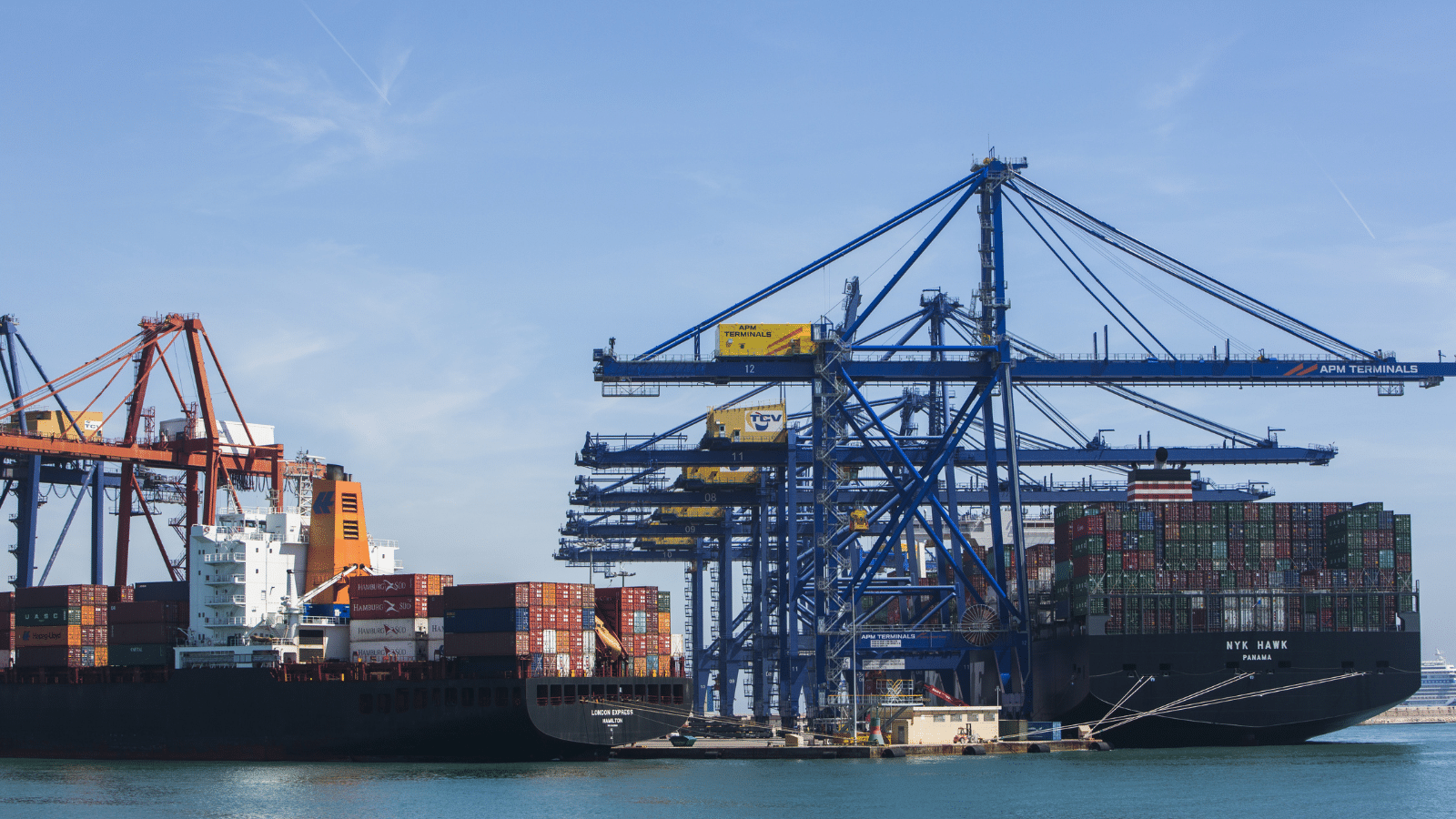
Spanish ports have spent two decades being described as a corridor. Ships call, cargo moves, and inventory heads elsewhere. For a brand deciding where to hold inventory, a transhipment corridor is scenery. It is traffic passing the window.
The 2025 close reads differently. Spanish ports handled a record 18.6 million TEU, up 2.7%, according to Puertos del Estado, the public body that runs the state port system. The split underneath that total is the interesting part: import-export TEUs grew 7.8%, while transit TEUs slipped 0.6%.
The second half of that sentence deserves care. Puertos del Estado notes that 2024 was lifted by the Red Sea disruption, which temporarily pushed extra transhipment through Spanish terminals, so a small dip in transit volume is not evidence of decline. The 7.8% is the figure that stands on its own. More containers are being landed for the Spanish and European market instead of being reloaded onto another vessel. General cargo makes the same point from another angle, closing the year at a record 278.8 million tonnes, with conventional cargo up 3.6%.
For an online store, this is not a shipping statistic. It is a capacity question. A container that is landed rather than transhipped has to go somewhere within hours: cleared, unloaded, checked, put away, and reflected accurately in a stock file before the first order arrives. None of that happens on a quay. It happens in a building, and it is the reason the port map and the warehouse map are not the same map.
The two coasts do different jobs. Barcelona and Valencia sit on the Mediterranean, the natural landing point for volume routed through Suez, with road access into France and northern Italy. Algeciras guards the Strait. Madrid, inland and central, is the distribution counterweight rather than an arrival point. Most brands entering Spain either land on the coast and distribute from the centre, or split the two. Which pattern fits depends on your inbound flow, a decision covered in more depth in our guide to cross docking logistics companies in Spain.
The delivery promise: Iberia first, then the second ring
Landing the container is half the promise. The other half is what happens after the order comes in. According to Eurostat’s 2025 survey, 20% of EU e-shoppers reported delivery slower than expected – the single most common complaint, ahead of every other category.
What a Spanish node can actually promise depends on geography and on one contractual detail most brands never negotiate: the cut-off time. A warehouse that closes dispatch at 14:00 and one that closes at 18:00 look identical on a service list and differ by a full day at the customer’s door. Ask for the cut-off in writing, per carrier, and ask what happens to an order that arrives ten minutes after it.
From the Madrid and Barcelona axis, next-day delivery across mainland Spain is the standard expectation rather than a premium service. Portugal extends naturally from the same stock, by road, without a second inventory. That is the first ring, and it is the one a single Spanish warehouse serves properly.
The second ring is southern France and northern Italy, reachable by road and by short-sea routes that keep growing: ro-ro traffic through Spanish ports rose 2.8% in 2025 to 74.7 million tonnes. Serving that ring from Spain is viable, but transit times lengthen and the economics shift. At some volume, a second node makes more sense than a longer line-haul, and an honest operator will tell you where that line sits instead of quoting you for both.
The islands are a separate operational reality. The Balearics add a sea leg and a longer cycle. The Canary Islands sit outside the EU customs and VAT territory, which means separate documentation, a different carrier set and lead times that will never match the mainland. Any provider that quotes you a single national SLA covering the Canaries has either not read the brief or is hoping you will not check.
What an entry hub actually demands from a warehouse
On a service list, a domestic fulfilment brief and an entry-hub brief look identical. Receiving, storage, picking, packing, dispatch, returns. The words match. The operations behind them do not.
The first divergence is at goods-in. A domestic warehouse receives palletised stock from a supplier a few hours away, in quantities someone already agreed. An entry hub receives a floor-loaded 40-foot container holding thirty mixed references that left a factory eleven weeks earlier. If the count is short, the supplier is eight time zones away and the purchase order is long closed. That container has to be unloaded, counted, checked and reconciled against the manifest before a single unit is sellable, because a stock file that says 400 when the shelf holds 340 will sell 60 orders it cannot fill.
The second is inspection. When you cannot inspect at origin, goods-in is your only quality gate. Damage, wrong artwork, missing components and substituted packaging all surface here or they surface at the customer’s door. A warehouse built for domestic replenishment rarely has that discipline, because it never needed it.
The third is market preparation. Stock arriving from outside the EU frequently is not yet saleable in Spain: labels in the wrong language, missing regulatory markings, retail packaging built for another market, marketplace requirements that differ from your own channel. Doing that work at the point of entry rather than at origin is what keeps a supplier error from becoming a container of unsellable inventory. It is also why co-packing, labelling and kitting matter more to an importer than to a domestic seller.
The fourth is rhythm. Inbound arrives in lumps and outbound leaves in a steady stream, and the two peaks rarely align. A container landing on a Tuesday and a Black Friday order surge are separate capacity problems inside the same building, and an operator that solves one by borrowing labour from the other will fail both.
This is the shape of demand the industry itself reports. In the 2026 Annual Third-Party Logistics Study, 88% of shippers described their 3PL relationships as successful, and providers named customisation and value-added services among the main forces pulling those relationships closer. Standard warehousing is not what brands are outsourcing. The work around it is.
Returns in-market: the cross-border trap
Selling into Spain from a warehouse in another country works until the first return. Then the arithmetic turns. A customer in Valencia sends a jacket back to a facility near Rotterdam. The parcel takes a week to arrive, sits in a queue, gets inspected, and is restocked eleven days after it left her hands. If your stock came from outside the EU, that same movement can drag customs treatment behind it. Meanwhile the unit is unsellable, the refund clock is running, and the customer is deciding whether to order from you again.
Multiply that by a category with any real return rate and the return address stops being an administrative detail. It becomes the largest single controllable cost in your Spanish operation.
Returns handled in-market change all three variables at once. The parcel travels a domestic leg instead of an international one. Inspection happens where the stock lives, so a saleable unit goes back on the shelf in days rather than weeks. And the refund can be triggered on receipt rather than on arrival at a hub in another country.
The Eurostat data shows why this matters beyond cost. Ten percent of EU e-shoppers received a wrong or damaged item last year, and 6% found the complaint process difficult or got no satisfactory answer. The second number is the one that loses customers. A brand can survive sending the wrong size. It rarely survives being slow and opaque about fixing it.
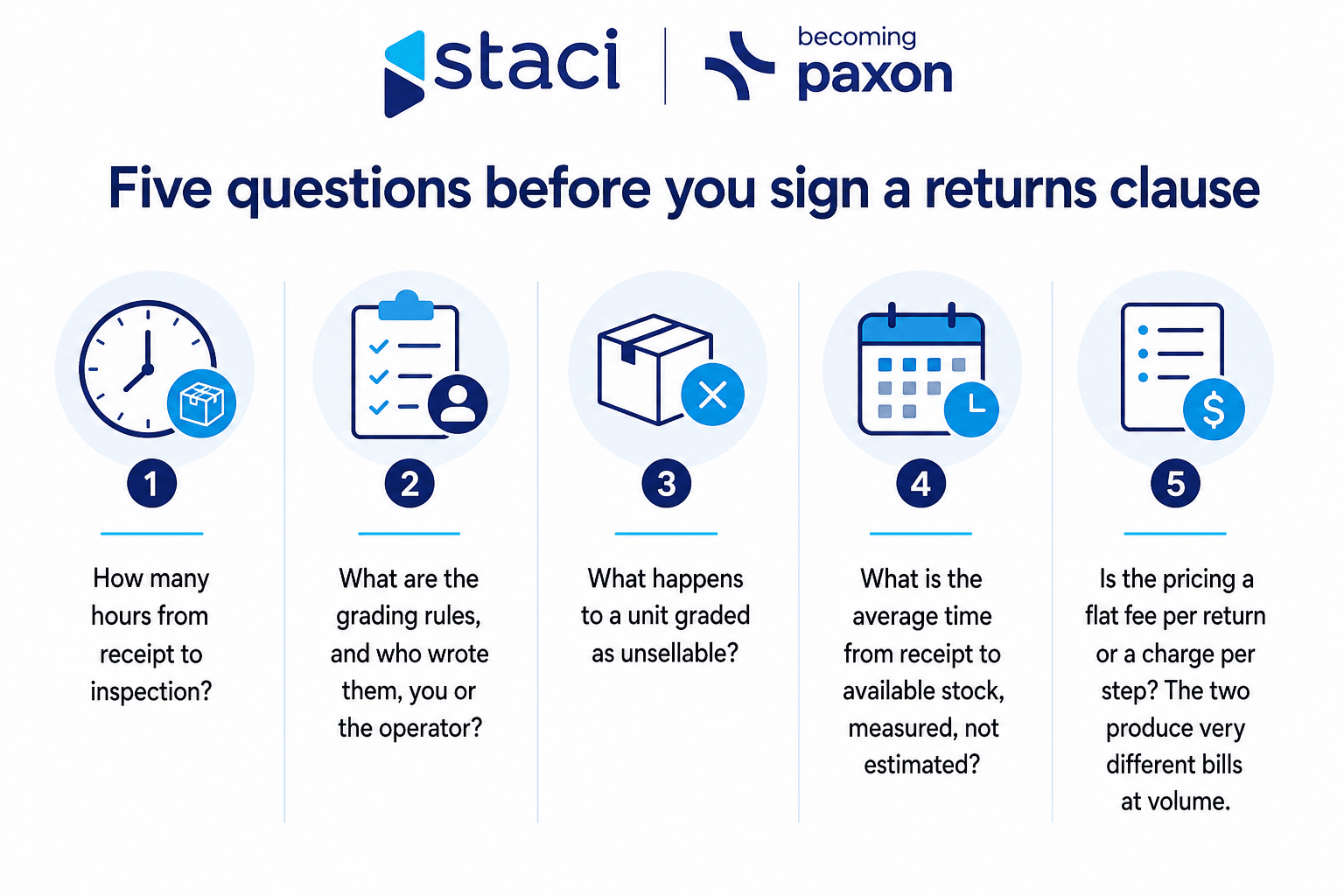
So the questions to put to a prospective operator are specific. How many hours from receipt to inspection? What are the grading rules, and who wrote them, you or them? What happens to a unit graded as unsellable? What is the average time from receipt to available stock, measured, not estimated? And how is the whole thing priced, because a flat per-return fee and a per-step charge produce very different bills once volume arrives.
Technology for a multi-country operation
Every provider integrates with Shopify. That question stopped being a differentiator years ago, and the practical detail of platform connections and onboarding sits in our companion guide to fulfillment costs in Spain.
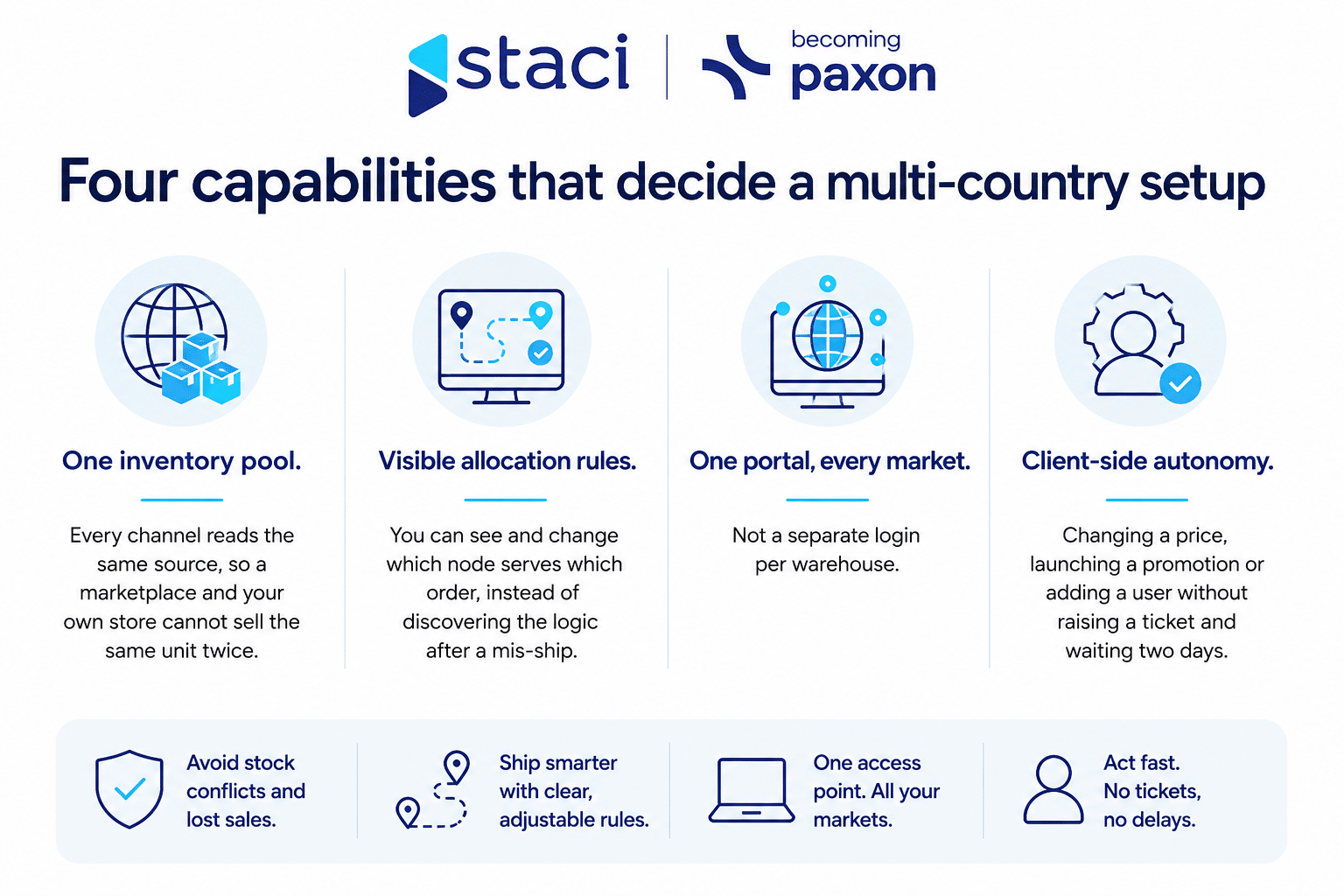
The question that separates operators is what happens when you run more than one market from one stock file. Four capabilities matter. A single inventory pool that every channel reads from the same source, so a marketplace and your own store cannot sell the same unit twice. Allocation rules you can see and change, deciding which node serves which order rather than discovering the logic after a mis-ship.
One portal for every market you operate, not a separate login per warehouse. And client-side autonomy, so changing a price, launching a promotion or adding a user does not require raising a ticket and waiting two days.
Security belongs on that list too. You are handing an external company your customer addresses and your order history, and certification is the only evidence available to you before signing.
This is where Staci, now part of the pan-European Paxon network, runs its operation through Ecats Staci, its proprietary platform. Ecats Staci is ISO 27001 certified, updated automatically every month, and gives brands real-time control of stock and orders alongside full autonomy over products, pricing, promotions and users, with integration into client systems. For a brand operating Spain as an entry point rather than a single market, that visibility is not a reporting convenience. It is how you know what you own and where it is standing.
How to evaluate a cross-border fulfilment partner
Most operator selection processes compare lists of services. A more reliable approach is to compare evidence. Any provider can claim a capability in a sales meeting; a good provider can demonstrate it with measurable processes, documented procedures and operational data.
| Ask about… | A good answer sounds like… | Be cautious if you hear… |
| Container receiving capacity | Units per shift for floor-loaded devanning, supported by a recent operational example. | «We handle containers.» No throughput figures or examples. |
| Goods-in discrepancy process | A documented procedure explaining how shortages or discrepancies are identified, reported and signed off. | «Discrepancies rarely happen.» |
| Dispatch cut-off times | Carrier-specific cut-off times written into the SLA or contract. | One generic national cut-off with no carrier detail. |
| Returns to available stock | A measured average turnaround time, together with the methodology used to calculate it. | An estimate, or simply «We’re fast.» |
| Relabelling and market preparation | Examples of relabelling, kitting or localisation carried out for comparable products. | The work is referred to a third-party supplier. |
| Island and cross-border coverage | Separate SLAs for mainland Spain, the Balearics, the Canary Islands and EU destinations. | One SLA claimed to cover every destination. |
| Scaling beyond Spain | Named facilities or network partners, together with a clear commercial model for expansion. | «We can look into that.» |
The objective is not to find the provider with the longest list of services, but the one that can demonstrate- through measurable evidence-that those services work in practice.
It also helps to know which type of operator you are talking to, because the Spanish market splits by specialty rather than by size. Global integrators such as DHL Supply Chain, UPS and FedEx Logistics bundle warehousing with their own transport networks. Domestic parcel and returns specialists such as SEUR and Celeritas concentrate on B2C delivery across Spain and Portugal.
Ecommerce specialists including Logisfashion target D2C brands with platform integrations and flexible volume tiers. Amazon FBA suits sellers whose demand is concentrated on that marketplace and nowhere else. Pan-European networks such as byrd and ShipBob prioritise regional coverage over depth in any one country.
None of those profiles is wrong. They are answers to different questions, and the entry-hub brief is a narrow one: land volume, prepare it for this market, ship it fast, take it back cleanly, and be ready when the same brand wants France next year.
Staci as your entry node in Spain
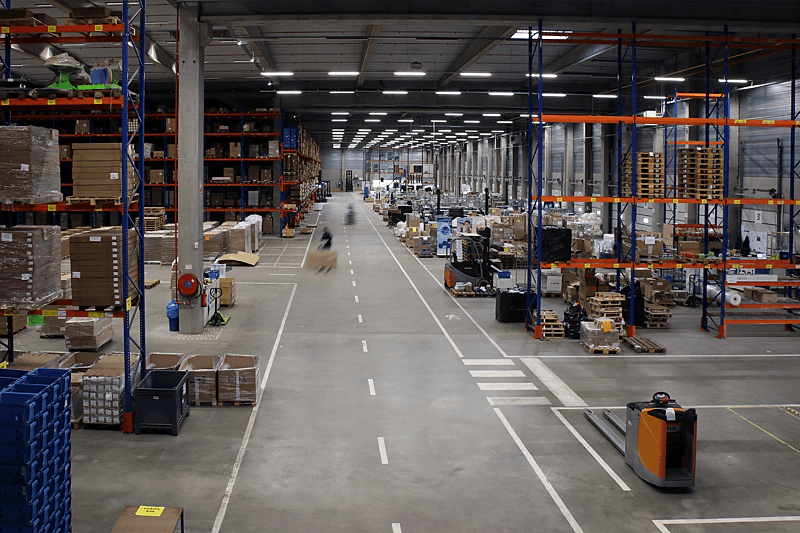
Operators able to support this type of entry-hub strategy are relatively rare, because they need to combine warehousing, market preparation, transport management and reverse logistics under a single operation. Staci is one of them. Staci has been a fulfilment specialist since 1989 and has operated in Spain for more than twenty years, running 7 centres across Barcelona and Madrid with over 42,000 m² and more than 180 professionals.
The scope is built for the brief described above rather than assembled from separate suppliers: reception and product control, warehousing, picking, packing, co-packing, labelling, cross-docking, transport management and reverse logistics, in sectors ranging from cosmetics and perfumery to ecommerce, childcare, houseware, retail and FMCG. Container arrives, stock is checked, prepared for this market, sold, shipped, returned, restocked. One operator, one stock file, one portal.
The Paxon network is what makes the next step cheaper than the first. Growth beyond Spain into France, the UK, Germany, Benelux or other European markets does not require finding, auditing and onboarding another 3PL, because Staci sits alongside Active Ants, Base Logistics and Radial inside the same network and the same service model. The Spanish warehouse becomes a node rather than an island.
For an international online store, that is the practical test of the best ecommerce warehouse in Spain. Not the size of the building. Whether it can receive what you land, prepare it for the market you are entering, deliver on the promise your checkout makes, and still be the right partner when Spain is no longer the only market you sell in.
If you are evaluating Spain as your next fulfilment location, our team can help assess whether a single Spanish node -or a wider European network-best fits your operation.
Frequently asked questions
What is an ecommerce warehouse in Spain?
It is a facility that manages the full order cycle for online stores: receiving and checking inbound stock, storing it, picking and packing individual orders, managing carriers, processing returns and reflecting all of it in a live stock file connected to your sales channels.
Why use a Spanish warehouse instead of shipping from another EU country?
Because delivery time and the returns address are decided by where the stock sits. Domestic delivery across mainland Spain is next-day from the Madrid and Barcelona axis, and a Spanish return address turns an international reverse leg into a domestic one.
What makes an entry hub different from a domestic fulfilment warehouse?
Inbound. An entry hub receives floor-loaded containers with mixed references from suppliers on another continent, so it needs devanning capacity, a serious goods-in inspection gate and the ability to relabel or repackage stock for the local market before it becomes sellable.
Can a warehouse in Spain serve the rest of Europe?
Portugal and mainland Spain are served well from a single Spanish node. Southern France and northern Italy are viable by road and short-sea. Beyond that ring, transit times and cost usually justify a second location rather than a longer line-haul.
How should returns be handled for cross-border sellers?
Locally. Ask for the measured time from receipt to available stock, the grading rules and who wrote them, the disposition path for unsellable units, and the pricing model, since flat and per-step return fees produce very different totals.
Do the Canary Islands work like the rest of Spain?
No. The Canaries sit outside the EU customs and VAT territory, which means separate documentation, a different carrier set and longer lead times. Any provider offering one national SLA that includes the Canaries has not read the brief.
What technology should a Spanish 3PL provide?
A single inventory pool feeding every channel, visible allocation rules, one client portal across all markets served, client-side control of products, prices, promotions and users, and a recognised information-security certification.
How do I compare providers fairly?
Ask for evidence rather than features: container throughput per shift, dispatch cut-offs per carrier in writing, measured returns turnaround, and named facilities for any market you plan to expand into.
Does Staci offer ecommerce warehousing in Spain?
Yes. Staci operates 7 centres across Barcelona and Madrid with more than 42,000 m², covering warehousing, order preparation, co-packing, labelling, cross-docking, transport and reverse logistics, managed through the Ecats Staci platform.
References
- CNMC (National Commission on Markets and Competition). E-commerce Statistics – Fourth Quarter 2025.
- Puertos del Estado (Spanish Ports Authority). 2025 Port Traffic Statistics. Eurostat. E-commerce statistics for individuals (2025).
- NTT DATA, Penske Logistics & Korn Ferry. 2026 Annual Third-Party Logistics Study.
- European Commission. Taxation and Customs Union – VAT and customs arrangements for special territories.
- Staci. Company information and Ecats Staci platform. Available at: https://www.staci.com
- Paxon Group. European fulfilment network. Available at: https://www.paxon.eu